Water damage repairs and wet area lining
We do two related jobs here and they meet in the same rooms. One is a wall or a ceiling that has taken water and has to be assessed before anybody decides what happens to it. The other is lining a bathroom, an ensuite or a laundry so a waterproofer and a tiler can work on top of it. We take both, from Thirroul and Wollongong through Shellharbour and Kiama down to Nowra. What we do not do is the membrane, because in NSW waterproofing is a separate trade licence. So we line the room and a licensed waterproofer seals it.
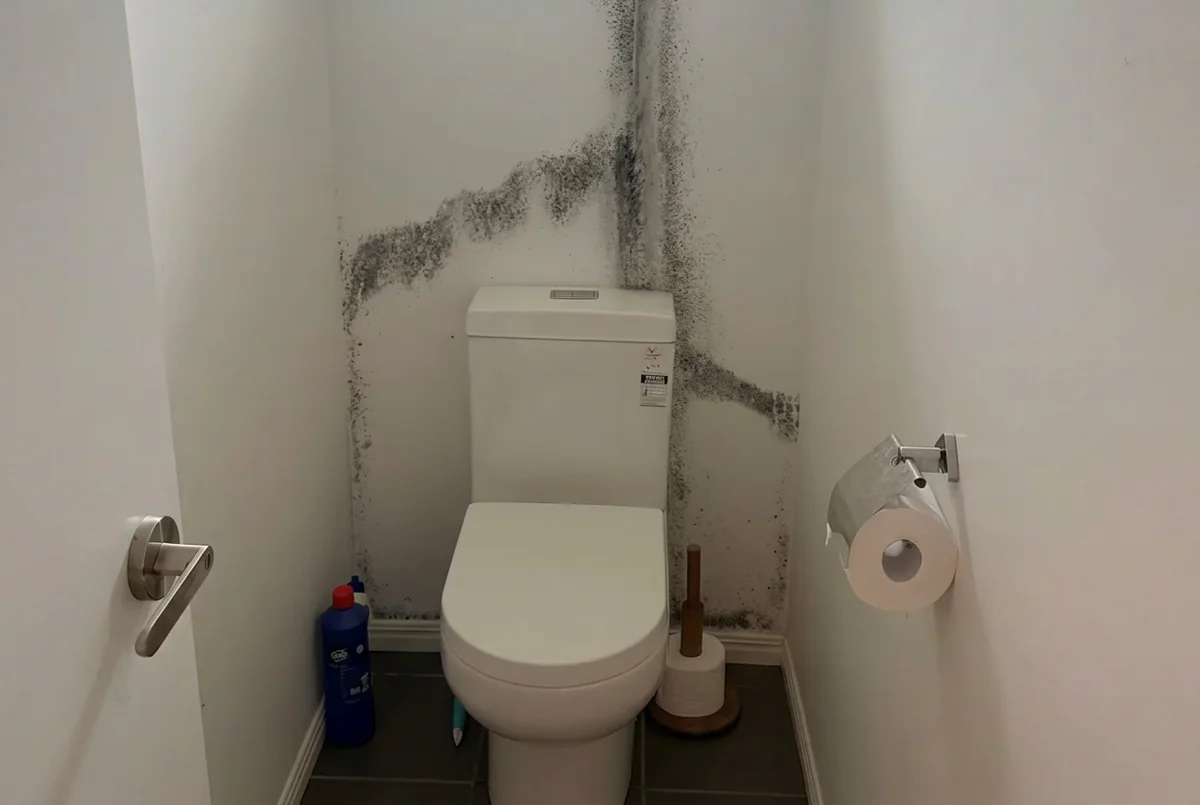
Water damaged walls and ceilings
First question is whether the water has stopped, because nothing goes back under a live leak. Then the lining gets assessed on what it has taken rather than guessed at. Where the water effect has been minor, the board is dried out and then inspected for deterioration or warping. Only after that inspection does anyone decide whether it can stay. Drying is not the decision, it is what makes the decision possible. We use a moisture meter on the stain, photograph what we find, and put the assessment in writing. Where a ceiling is involved and it has dropped or is cracking, that is a structural question first. It is a water question second, and it gets treated in that order.
- Nothing goes back under a live leak
- Moisture readings rather than a guess
- Dried, then inspected, then decided
- Photographed and written up
- Same thickness board on any replacement
- Wet area specification where the damage is in one
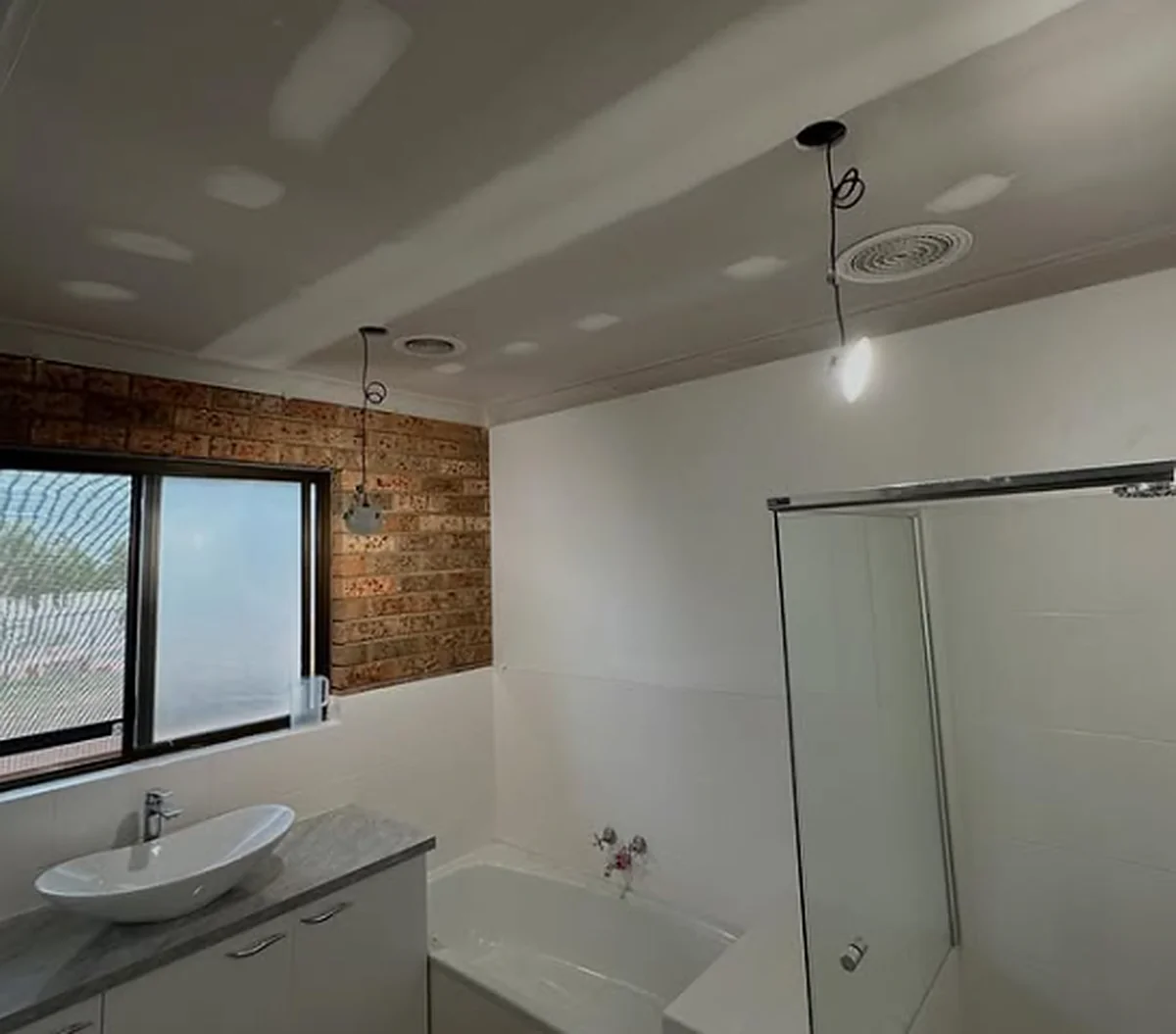
Lining bathrooms, ensuites and laundries
Moisture resistant plasterboard is a named water resistant substrate in the Code, and it is what goes on these walls. The framing gets checked first, with studs plumb and true at no more than 600mm centres. Noggings 25mm above the bath, the shower base and the tub, so the sheet edges are supported at the wettest line in the room. Noggings behind the soap holder, the hand rail and the towel rail as well. Framing at a bath or shower flange is checked out or packed. That way the face of the board finishes in front of the upturn rather than behind it. A preformed base goes in before the linings, never after. Sheets run horizontally, with a 6mm gap at the bottom edge and holes cut cleanly for the plumbing.
- Moisture resistant board throughout
- Studs at 600mm centres maximum
- Noggings 25mm above bath, base and tub
- Framing packed so the face clears the upturn
- Preformed base in before the lining
- 6mm gap at the bottom edge
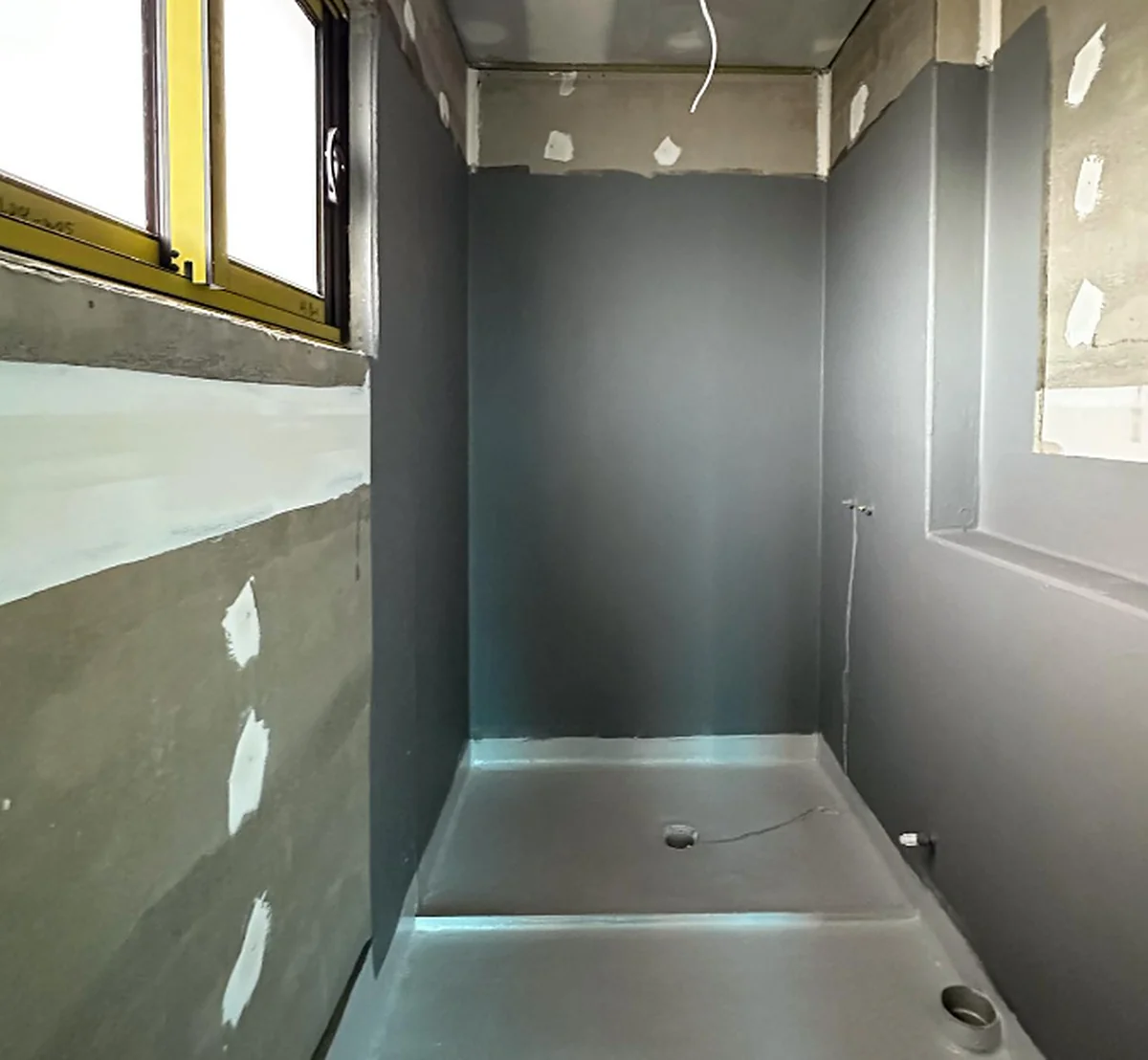
Set as a substrate, and handed over
A wet area wall is not finished for looking at, it is finished for the next two trades. Two documents govern what happens here, and AS 3740 is the Australian standard for waterproofing domestic wet areas. The Code's own wet area provisions sit alongside it rather than being replaced by it. In a tiled area the sheets are fixed with screws or nails only, never with adhesive. The fastener is a Class 3 grade for wet conditions, at the centres the tile weight calls for. Joints get a wet area base coat tape coat and a second coat and no finish coat. That compound sets hard enough that it goes on accurately rather than being sanded back afterwards. Edges against a preformed base or a bath and every plumbing penetration are sealed with a wet area sealant. Then it goes to the waterproofer with the extents, the substrate and the junctions ready, and after that to the tiler.
- No adhesive fixing in a tiled area
- Class 3 fasteners for wet conditions
- Wet area base coat, tape coat and second coat
- No finish coat behind tiles
- Edges and penetrations sealed
- Handed over ready for the membrane
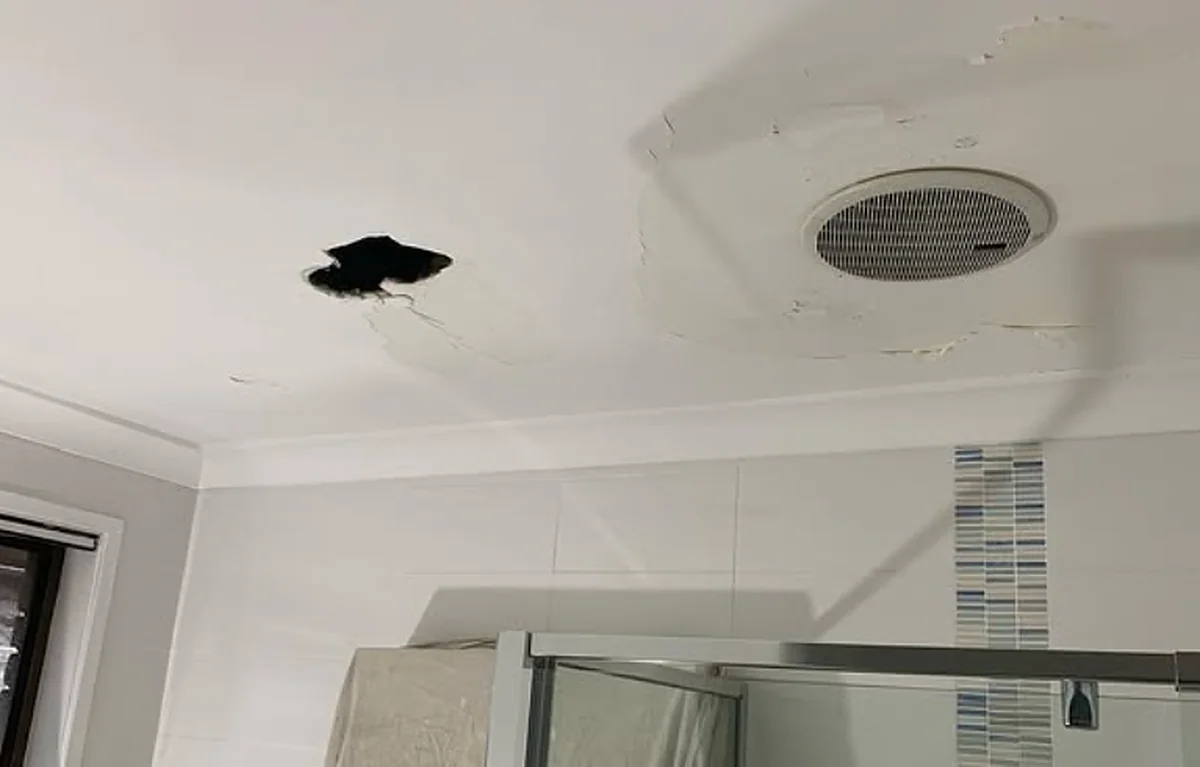
Insurance work, and the line we hold on it
We take insurance repair work and it is a real part of what we do. We deal with you, the owner, and not with your insurer, and that is a deliberate boundary rather than a limitation. What is useful to a claim is a clear record. So we photograph what we find, take moisture readings, and write the assessment down in a form a scope of works can use. What we will not do is tell you what your policy covers. We will not argue a claim on your behalf, because that is your insurer's business and yours. A scope of works can arrive with our part of it already written. Where it does, we will tell you plainly whether it matches the damage in front of us.
- Insurance repairs taken
- We deal with you, not your insurer
- Findings photographed and written up
- Moisture readings recorded
- No opinion offered on your cover
- Told plainly if a scope does not match the damage
What brings people to this page
A pipe let go, or a bath overflowed
The lining takes the water and shows it for weeks afterwards. What happens to the board depends on how wet it got, and that gets established rather than guessed.
A bathroom, ensuite or laundry is being redone
Strip out and re line in moisture resistant board, fixed and jointed for tiling rather than for painting. We are one trade in a sequence and we work to the sequence.
A crack has opened in a tiled wall
This is the one job on the site with a genuine urgency behind it. Anything in a tiled area that would let water into the wall cavity is meant to be dealt with rather than left.
The shower has been leaking and the wall behind it is soft
Usually a membrane or a seal that has failed, which is a waterproofer's territory. We deal with the lining once somebody has dealt with the cause.
There is an insurance claim attached to it
We take insurance work and we deal with you rather than with your insurer. Photographs, readings and a written assessment are what a scope of works needs.
An older bathroom is being brought up to date
A bathroom built before May 2023 was built to a different rule for shower walls. That is worth knowing when a quote today does not match a quote from a few years ago.
The rules this work is built to
We line it. A licensed waterproofer membranes it
In NSW, waterproofing is its own trade licence with its own qualification, separate from plastering. So the honest division on a bathroom is three trades. We supply and install the lining and set it as a tiling substrate. A licensed waterproofer applies the membrane. A tiler tiles it to AS 3958.1, the Australian tiling standard, with an adhesive compatible with that membrane.
Shower walls are waterproof to 1800mm, not water resistant
The Code requires the walls of a shower area to be waterproof to not less than 1800mm above the floor substrate. Junctions and joints inside that area are waterproof not less than 40mm either side, and so is every penetration. This changed on 1 May 2023, when shower walls went from water resistant to waterproof. A lot of published advice has not caught up.
Behind tiles the finish is Level 3, on purpose
Every other surface we hand over is finished to Level 4 or better. Behind tiles the specification is Level 3, which is deliberately lower, because the wall is about to disappear under adhesive. Corners are set with paper tape and two coats of wet area base coat. Every fastener head is covered, and there is no finish coat at all. Anybody charging you for Level 4 behind tiles is charging for something nobody will ever see.
Your tile choice decides how many screws go in the wall
A wall that is not being tiled takes fasteners at 400mm centres. Tiles up to 12.5kg per square metre take 200mm. Tiles up to 32kg per square metre take 100mm. Large format porcelain and stone look tiles are heavy. In a tiled area it is screws or nails only, in a Class 3 grade for wet conditions. Adhesive fixing is not acceptable at all.
A tiled wall takes control joints far closer together
A plain internal wall runs to 12m before it needs a control joint. Tile that same wall and the maximum drops to 4.8m. Tiles and board move differently. A tiled wall that has run too far without a joint cracks along the line where the movement had nowhere to go. That is a set out decision made before the sheets go up.
Get a free quote
Send photos and tell us whether the water has stopped. On a leak we need to know if it is still coming in, because nothing goes back on a wall under a live leak. On a bathroom, tell us who the tiler is and what tile is going up. That last one sounds like an odd question and it changes how the wall is fixed.
Brands we supply, install and repair
We supply the board, the cornice and the compound on every job, and these are the brands we sheet with.
Service available across every Wollongong region
The Northern Illawarra
Helensburgh, Stanwell Park, Coalcliff, Scarborough, Austinmer, Thirroul, Bulli, Woonona, Russell Vale, Corrimal, Towradgi, Balgownie and Fairy Meadow
Wollongong and Dapto
Wollongong, North Wollongong, West Wollongong, Coniston, Mangerton, Figtree, Cordeaux Heights, Mount Keira, Unanderra, Berkeley, Port Kembla, Warrawong, Kanahooka, Horsley, Koonawarra and Dapto
Shellharbour and Kiama
Albion Park, Albion Park Rail, Oak Flats, Lake Illawarra, Mount Warrigal, Barrack Heights, Warilla, Flinders, Shell Cove, Shellharbour, Blackbutt, Minnamurra, Kiama Downs and Kiama
The Shoalhaven
Nowra, North Nowra, South Nowra, Bomaderry, Worrigee, Sanctuary Point, St Georges Basin, Vincentia and Huskisson
The Southern Highlands
Mittagong, Bowral, Burradoo, Moss Vale, Berrima and Renwick
Frequently asked questions
Do you do the waterproofing as well?
No. In NSW waterproofing is a separate trade licence with its own qualification, and it is not the plastering licence. A bathroom therefore passes through three sets of hands, and ours goes on first. That is the board, fixed and jointed ready for what follows. Then the membrane, by somebody licensed for it, and then the tiling over an adhesive chosen to suit that membrane. Anybody offering to do all three under one plastering licence is telling you something worth checking before you book them.
Can a water damaged wall be dried out instead of replaced?
Yes, sometimes, and it depends on how much water it took. Where the effect has been minor, the board is dried and then inspected for signs of deterioration or warping. It is retained only if it comes through that inspection unaffected. The drying is not the decision, it is what lets the decision be made. Where a sheet has been soaked rather than dampened, that is a different question with a different answer. We set that one out on our sagging ceiling page.
Why do shower walls have to be waterproof now?
Because the rule changed on 1 May 2023, and before that the walls of a shower area had to be water resistant. Now they have to be waterproof to not less than 1800mm above the floor substrate. Junctions and joints inside that area are waterproof for not less than 40mm either side, and every penetration is waterproof as well. That 1800mm carries through the full extent of a niche or a soap holder too. It is why a bathroom quoted today does not match one quoted a few years ago.
What finish goes on behind bathroom tiles?
Level 3, and it is lower than what goes anywhere else in the house on purpose. The wall is about to be covered in tile adhesive. A Level 4 or Level 5 surface behind it is money spent on something nobody will ever see. What does matter behind tiles is the fixing and the jointing. Corners set with paper tape and two coats of wet area base coat, every fastener head covered, and no finish coat. That is the specification, and it is not a shortcut.
Does the tile I choose change the plastering?
Yes, and it is the question people are most surprised by. Fastener spacing in a tiled wall is set by the weight of the tile going on it. An untiled wall takes fasteners at 400mm centres, and that halves to 200mm for tiles up to 12.5kg per square metre. It halves again to 100mm for tiles up to 32kg per square metre, which is four times the fixings of an ordinary wall. Large format porcelain and stone look tiles are heavy, so we need to know the tile before the sheets go up rather than after.
There is a crack in my tiled shower wall. Can it wait?
No. The manufacturer's own position, rather than ours, covers any crack or damage in a tiled area. Anything that would let water into the wall cavity is repaired immediately. Water behind tile does not announce itself, and it sits in the cavity against the framing and the back of the lining. The first visible sign is usually somewhere else entirely and much bigger. This is the one repair on this site where the honest advice is not to wait for a convenient week.
Will you deal with my insurance company?
No. We take insurance repair work and we deal with the homeowner rather than the insurer, which is a deliberate boundary. What we will do is photograph what we find, take moisture readings and put the assessment in writing. That gives you something a scope of works can be built on. What we will not do is tell you what your policy covers or run a claim for you. Those conversations sit between you and your insurer, and we would only be guessing.
Do you treat mould?
No. Mould remediation is not something this business offers and we do not give advice about it. Where a lining is being replaced anyway and there is mould on the back of it, that board goes out with the rest. It does not come back, and that is the extent of it. If mould is the actual problem rather than something found along the way, it needs somebody who does that work. It is worth sorting out before any new lining goes up over the top of it.
Ready to get started?
Get a free quote, or call and tell us what the job is.