Plasterboard wall repairs, done to the published method
We repair plasterboard walls to the manufacturer's own published method. That method is what separates a patch that disappears from one that reads as a square on the wall forever. A hole in a wall looks like the simplest job in this trade and it is the one most often done badly. The procedure has real dimensions and real timings behind it. We take single holes, because there is no minimum job size here, and we quote them from a photograph. We cover the whole service area, from the northern villages down to Nowra and inland to Bowral, Mittagong and Moss Vale.
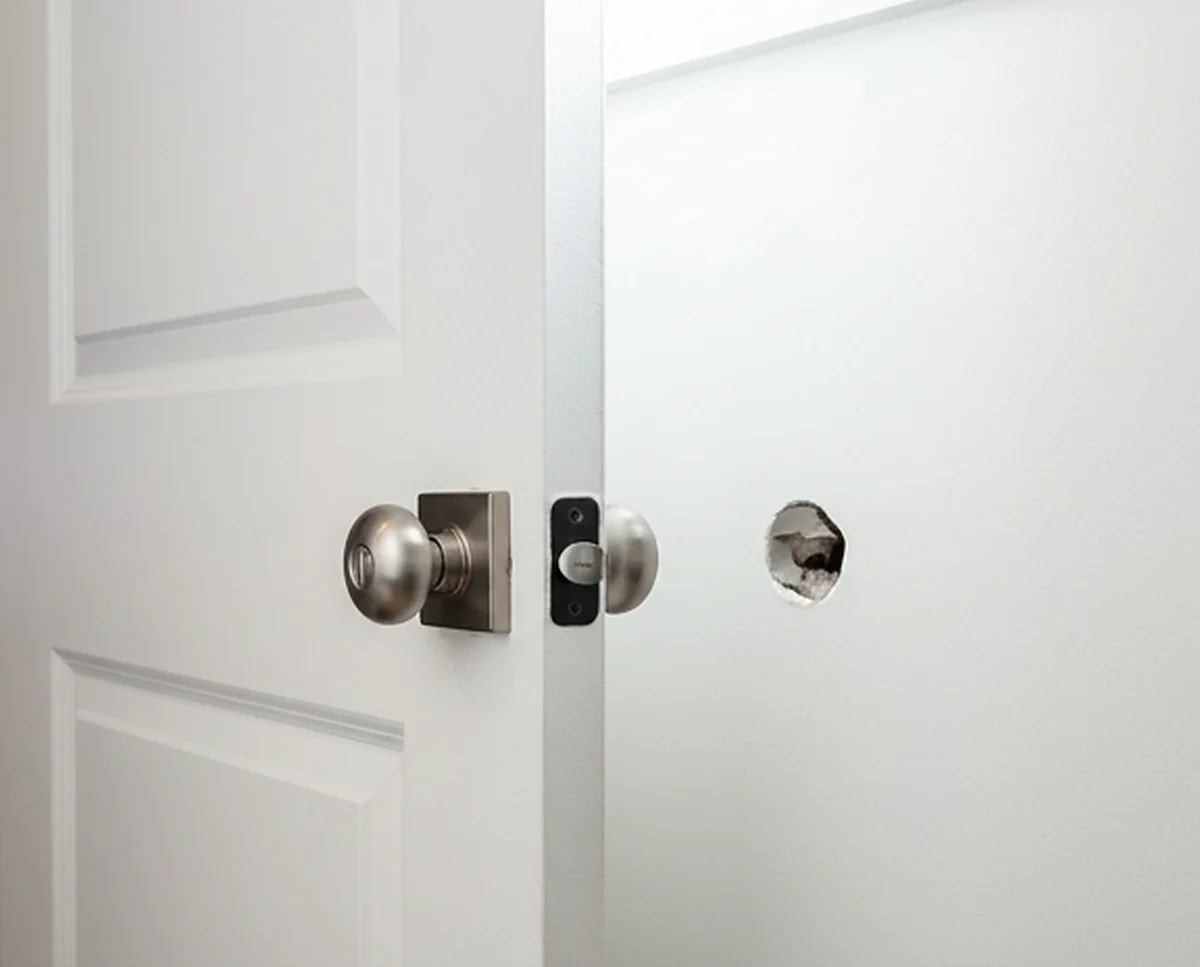
Holes, dents and scrapes
This is the everyday repair, and small damage gets filled and sanded. A hole up to 25mm across is filled, taped and given two coats, each one wider than the last. Anything bigger is cut out to a clean rectangle and backed with two blocks inside the cavity. It is then patched with board of matching thickness, taped and coated the same way. We cut with a saw or a multi tool, never by knocking the damage out. An impact tool such as a hammer is not an acceptable way to make a cut out. Doing it that way turns a small repair into a large one. There is no minimum job size, so one hole is a job.
- Priced from a photograph with something in it for scale
- No minimum job size and no minimum charge
- Cut clean with a saw, never knocked out
- Patch cut from the same thickness as the lining
- Coats feathered wider each time
- Left ready for paint, not painted
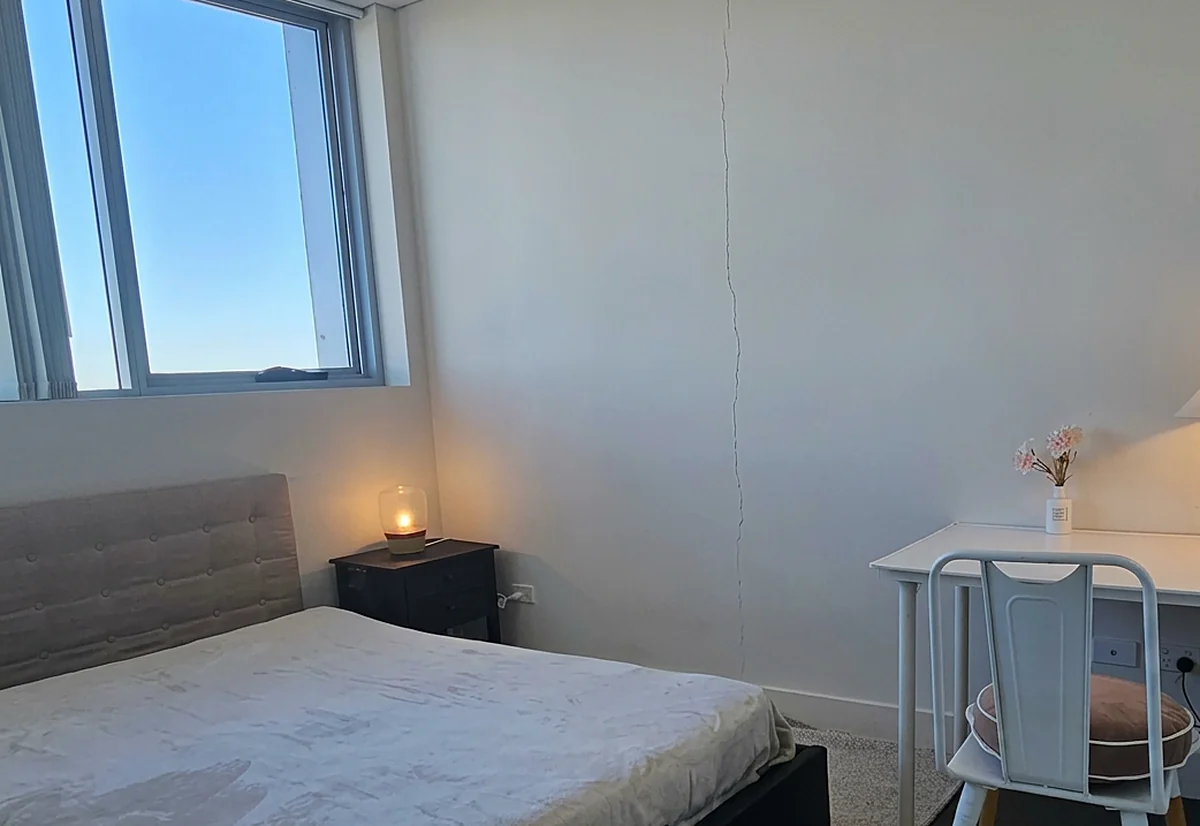
Cracks, popped fixings and peaked joints
These are not accidents and they are not filler problems. A line of popped heads or a ridge along a joint is telling you something. It is telling you how the wall was fixed and jointed in the first place. A crack that has been filled twice will be filled a third time unless somebody finds the reason. So we look for the cause before we mix anything, and peaking is one worth knowing about specifically. Under the NSW guide, peaking or jointing in plasterboard is defective if it is visible from a normal viewing position. Unlike cracking, there is no width threshold on it at all, and visible is the whole test.
- The cause looked for before the filler
- Popped fixings cut out rather than covered
- Peaking assessed against the NSW position
- Recurring cracks diagnosed, not refilled
- Told plainly when the fix is not a patch
- Photographed before and after
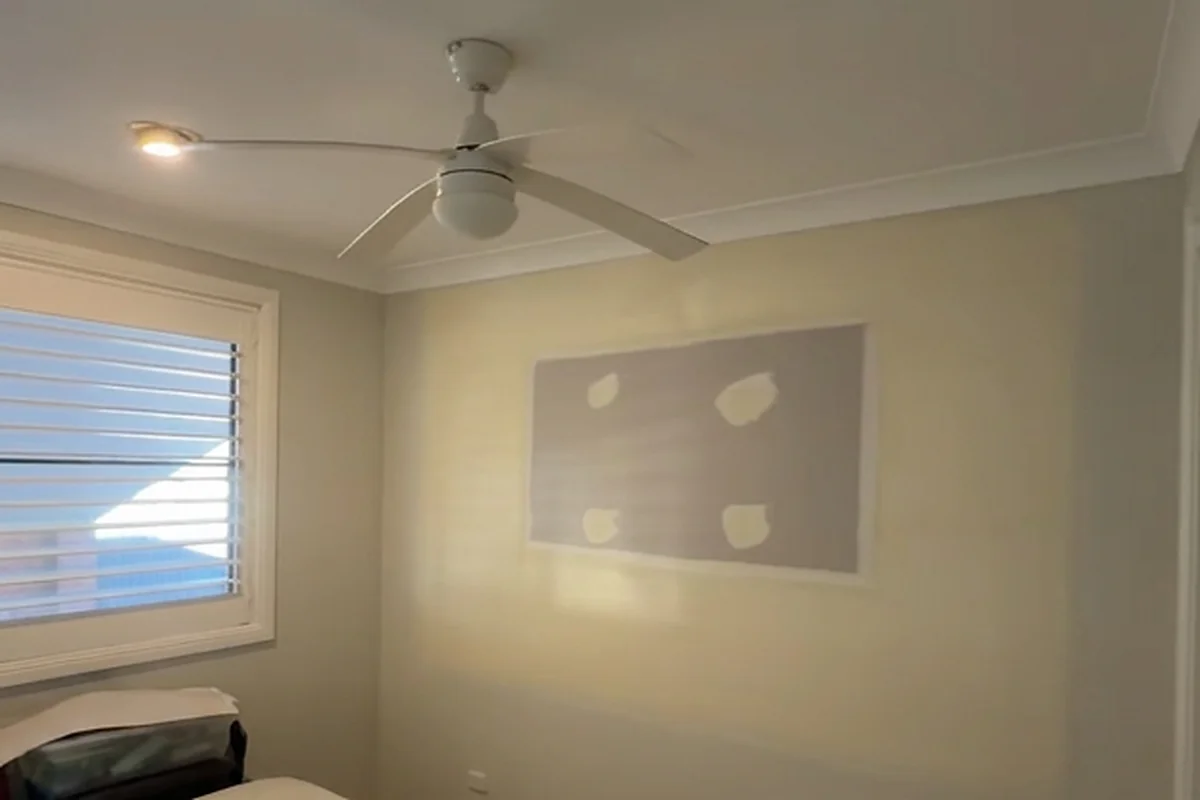
Make good across a whole house
End of lease, between tenancies, or getting a place ready to sell or photograph. This is usually twenty small repairs rather than one large one, and it is priced as a set rather than per hole. We work to fixed compound times, which matters when there is an inspection date. Those waits cannot be compressed, no matter who is asking for them. We photograph the work, and we do not take a position on whether something is fair wear and tear or damage. That is between you and your agent or your tenant. It is the same way we deal with a homeowner on an insurance repair and never with the insurer.
- Priced as a set, not per hole
- Worked to the inspection date where there is one
- Dust contained in an occupied house
- Photographed on completion
- Homeowners, landlords and agents
- No opinion offered on wear against damage
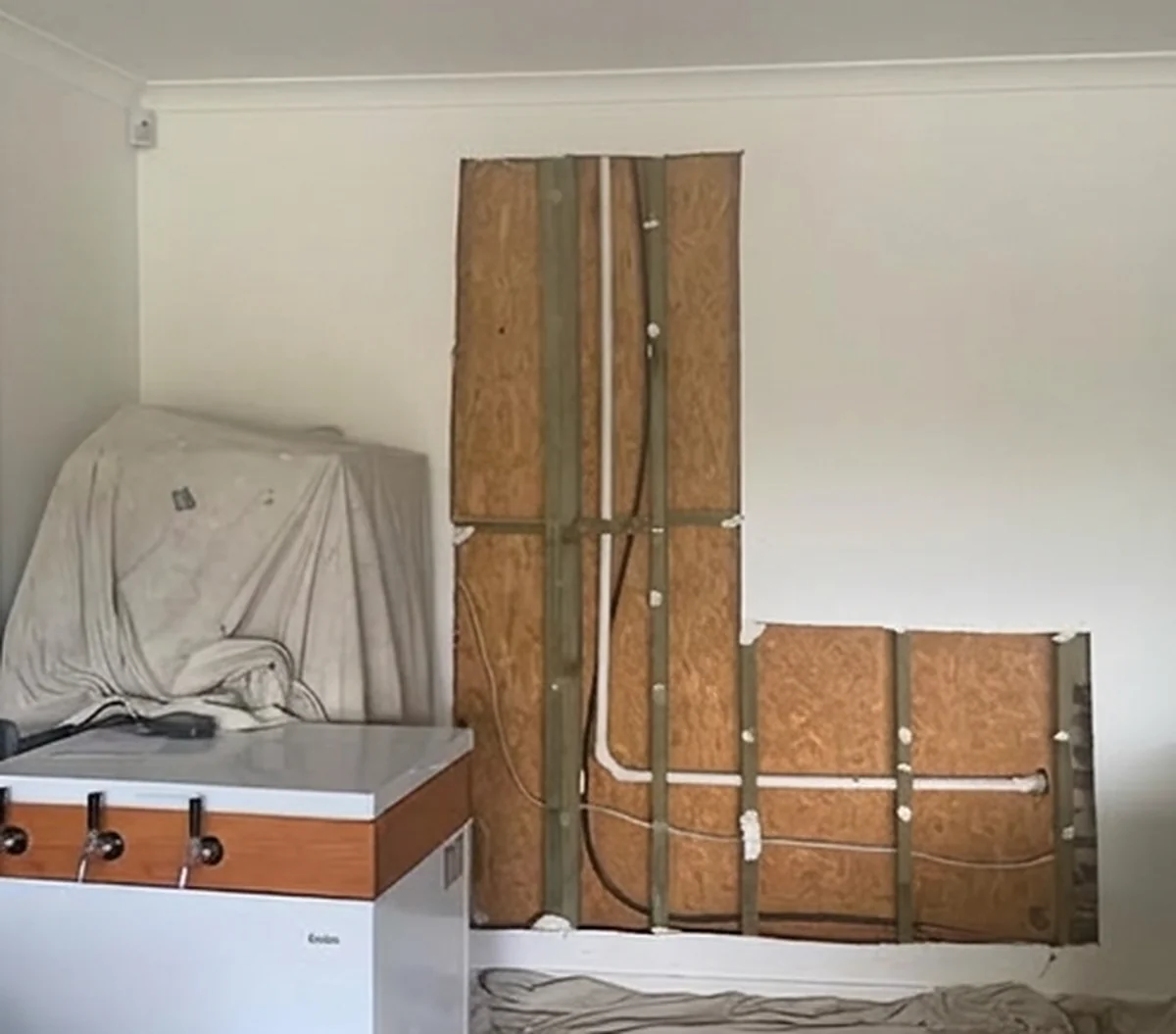
When the answer is a tougher wall
Where the same wall keeps getting hit, patching it again is not the honest recommendation, and impact resistant board exists for exactly this. Impactchek is a 13mm sheet at 10.5kg per square metre. It is built with a glass fibre mesh, a denser core and a heavy duty lining paper. It is rated to withstand twice the discernible force of regular plasterboard before it marks. It is made for corridors, garages and games rooms, which is a fair description of the rooms we get called back to. It handles differently on site, because the mesh sits behind the back face paper. That face has to be cut as well before the sheet will snap.
- Impactchek 13mm at 10.5kg per square metre
- Twice the force before a mark shows
- Mesh, denser core and heavy duty paper
- For hallways, garages and games rooms
- Whole wall rather than another patch
- Quoted against the cost of repeat repairs
The damage we get called to
A door handle or a foot has gone through the wall
The classic larger hole. It gets cut out square, backed from inside the cavity and patched with matching board. Almost everybody underestimates this one, and the reason is in the waiting rather than the working.
Dents, scrapes and picture hook holes before an inspection
Moving out, moving in, or getting a house ready to photograph. Usually a set of small repairs across several rooms rather than one big one, and it is priced as a set.
A wall of screw heads has popped through the paint
Little circles in a line, or a ridge running down a joint. That is a fixing or jointing fault rather than an accident, and putting filler over it without asking why puts it back next year.
A joint has peaked and you can see the ridge
A visible bulge along a joint line. NSW has a published position on this one and it is unusually clear, because peaking has no width threshold at all.
The same wall keeps getting damaged
A hallway, a garage wall, a games room, anywhere trolleys, bikes or kids go past daily. At some point the honest answer stops being another patch and becomes a tougher sheet.
A shelf, a bracket or a handrail came out and took the wall with it
The fixing pulls a section of the face paper away with it, which is a bigger repair than the hole suggests. Where it goes back matters as much as how it is filled.
What a repair done properly involves
25mm is the line between a fill and a patch
The manufacturer splits repairs into three. Dents and scrapes where the core has not been substantially damaged are filled and nothing else. A hole up to 25mm across is filled, taped over and coated twice. Anything larger is cut out, backed and patched with new board. Which side of 25mm a hole sits on decides the method, the time and the price. It is the first thing we work out.
A larger hole is backed from inside the cavity
Two strips of plasterboard about 100mm wide and 100mm taller than the hole are stuck inside the wall to form a frame. The new patch is bedded onto the face of them and brought level with the existing wall. The patch itself is cut from board of the same thickness as the lining it is going into. A patch of the wrong thickness reads as a shadow across that wall for the life of the house.
Most of a wall repair is waiting, and the waits are published
A larger hole contains two separate one hour holds before any finishing coat can go on. One while the backing blocks set inside the wall, one while the patch itself does. On top of that, the repair compound stays workable for only twenty minutes once mixed and wants about forty before it can be sanded. Those are the manufacturer's figures, not ours, and they are why a proper patch is a half day rather than twenty minutes.
Every coat goes 25mm wider than the last
The first coat over the tape overlaps the surrounding board by at least 25mm on every side. The second goes 25mm wider again. That progressive feathering is the whole reason a professional repair disappears into the wall. A rushed one shows as a square once the light moves across it. It is also why a repair patch is always much wider than the damage was.
The right tape, and the two places it must not go
The self adhesive mesh tape used on repairs is a repair product, not a jointing product. It is expressly not suitable for ceiling joints and not suitable for fire rated systems. Actual joints get paper tape, bedded with a minimum of 1mm of compound left underneath it. Tape laid onto a dry surface is a crack waiting to happen.
Get a free quote
Send a photo with something in it for scale, such as a hand, a phone or a coin. Size is the first thing that decides the method and therefore the price, and a photograph without scale tells us almost nothing. Tell us the room as well, and whether the wall is tiled or backs onto a garage, because those two are different jobs.
Brands we supply, install and repair
We supply the board, the cornice and the compound on every job, and these are the brands we sheet with.
Service available across every Wollongong region
The Northern Illawarra
Helensburgh, Stanwell Park, Coalcliff, Scarborough, Austinmer, Thirroul, Bulli, Woonona, Russell Vale, Corrimal, Towradgi, Balgownie and Fairy Meadow
Wollongong and Dapto
Wollongong, North Wollongong, West Wollongong, Coniston, Mangerton, Figtree, Cordeaux Heights, Mount Keira, Unanderra, Berkeley, Port Kembla, Warrawong, Kanahooka, Horsley, Koonawarra and Dapto
Shellharbour and Kiama
Albion Park, Albion Park Rail, Oak Flats, Lake Illawarra, Mount Warrigal, Barrack Heights, Warilla, Flinders, Shell Cove, Shellharbour, Blackbutt, Minnamurra, Kiama Downs and Kiama
The Shoalhaven
Nowra, North Nowra, South Nowra, Bomaderry, Worrigee, Sanctuary Point, St Georges Basin, Vincentia and Huskisson
The Southern Highlands
Mittagong, Bowral, Burradoo, Moss Vale, Berrima and Renwick
Frequently asked questions
How much does it cost to fix a hole in a wall?
From $120 for a single hole about the size of an apple. The size, the material and where it is all move that figure. A photograph with something in it for scale is what turns it into a real number. A hole up to 25mm across is filled and taped. Anything larger is cut out, backed from inside the cavity and patched with new board, which is more work and more waiting. There is no minimum job size, so one hole is a job we will take.
Will the repair be invisible?
No, not until it is painted, and we say that before the job rather than after it. A finished repair is sanded flush and feathered wide, and it is still not invisible. The compound is a different colour and texture to the wall around it, so you will see where it is. Once the wall is painted it disappears, and we do not paint. On a wall in a strong colour or an older paint finish, touching up the patch is usually the wrong call. The honest advice there is to repaint corner to corner.
Why does a small hole take half a day?
Because most of a wall repair is waiting rather than working, and the waits are the manufacturer's, not ours. The compound has a twenty minute working life and is ready to sand at around forty minutes. A larger hole then contains two separate one hour holds on top of that. The first is while the backing blocks set inside the cavity, and the second is while the patch itself sets. Neither can start until the one before it has finished. Rushing either of those is how a patch cracks or sinks later.
Can you repair one hole, or is there a minimum?
Yes, one hole is a job. There is no minimum job size and no minimum charge for a small patch. That is not true of everybody in this trade, and it is worth checking when you compare. Single repairs are quoted from a photograph, and several around the house is usually cheaper done in one visit. The setting and drying times then run in parallel rather than one after another.
There is a ridge along a joint in my wall. Is that a defect?
Possibly, and the NSW position on this one is unusually clear. Peaking or jointing in plasterboard is defective if it is visible from a normal viewing position. There is no width threshold attached to it, which is not the case for cracking, and visible is the entire test. That makes peaking one of the few plasterboard complaints where a homeowner can look and reach a conclusion. It is the same conclusion the published guide would reach. It is repairable, and it is worth establishing the cause first.
My screws keep popping through the paint. Why?
Popped fixings are a fixing and jointing fault rather than an accident, and they trace back to how the wall was put up. Filling them and painting over is the repair everybody tries first, and it is also why the same wall gets filled twice. The fixings need cutting out and re making rather than covering. Where a whole line of them has gone, the reason usually sits in the original installation. We will tell you what we find rather than quietly filling it again.
Can you patch a garage wall or a wall between two homes?
Yes, sometimes. It depends on whether that wall is a fire rated system. A wall between a garage and a house can carry a fire rating. So can a wall shared between two dwellings, and a wall close to a boundary. A rated wall is repaired by an assessed method rather than patched. The mesh tape used on ordinary repairs is expressly not suitable for fire rated systems. That is a good illustration of why it is a separate job. We establish which kind of wall it is before quoting.
How much mess does a wall repair make?
Some, and it is managed rather than pretended away, because sanding plasterboard compound makes fine dust. We use a sander with a bag on it, and hand sand where a machine will not reach. So there is dust in the air, and we contain it with sheeting and door barriers. That is better than leaving it to settle through the house. Repairs happen in furnished rooms with people living in them, and containment is most of what makes a repair job feel professional.
Ready to get started?
Get a free quote, or call and tell us what the job is.