Cornice installation and repairs, cut and set to the line
We install cornice to the tightest published tolerance in this trade. NSW says a plaster cornice is defective if it wanders more than 4mm off a straight line over any 2m. It has to hold that along the junction of a wall and a ceiling, each of which is allowed some deviation of its own. We do this work in every suburb we cover, from the escarpment villages in the north down to Nowra. We fit plain cove cornice, and we do square set as well. Square set is included at the same price rather than charged as an upgrade.
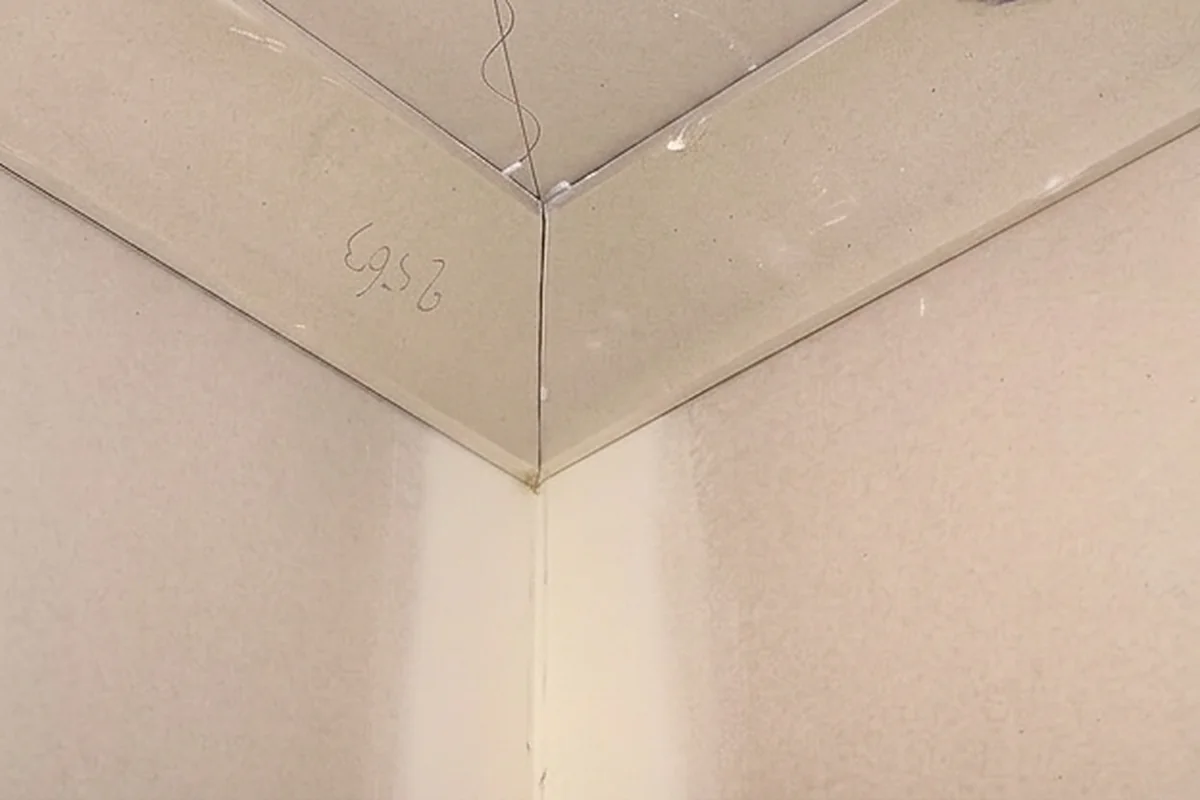
New cove cornice, or square set
Cove is the standard Australian cornice and it comes in two sizes here, 55mm and 90mm, which are available in every state. 75mm is a Western Australian and Victorian size, so it is not what we fit in NSW. The smaller profile makes a room read taller, which matters in a 2400mm ceiling, and the larger one gives a heavier, more formal line. Square set is the flush alternative with no moulding at all. It is included in the same job at the same price rather than charged as an upgrade. That surprises people, because most expect the plainer detail to cost more.
- Cove at 55mm and 90mm
- Cove or square set, priced the same
- Set out from a marked line, not by eye
- Every corner mitred in a box
- Second coat to mitres and butt joints
- Left ready for the painter
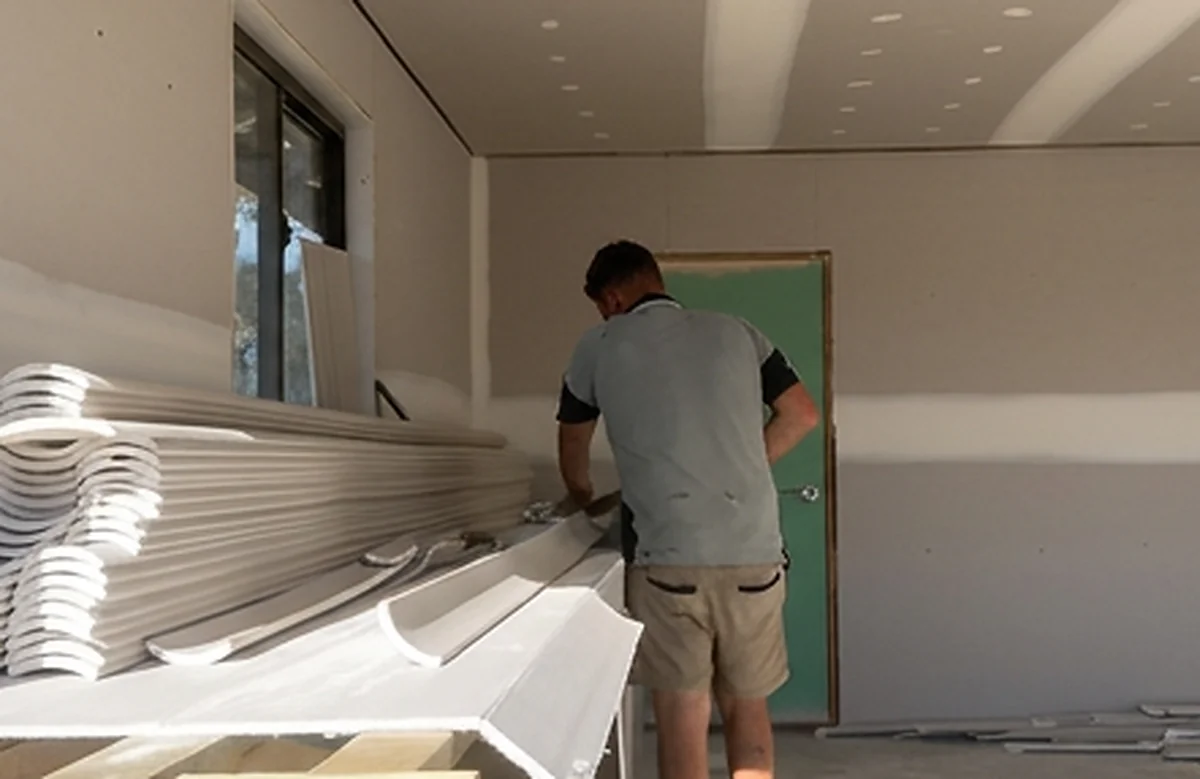
Cracked mitres, butt joints and junctions
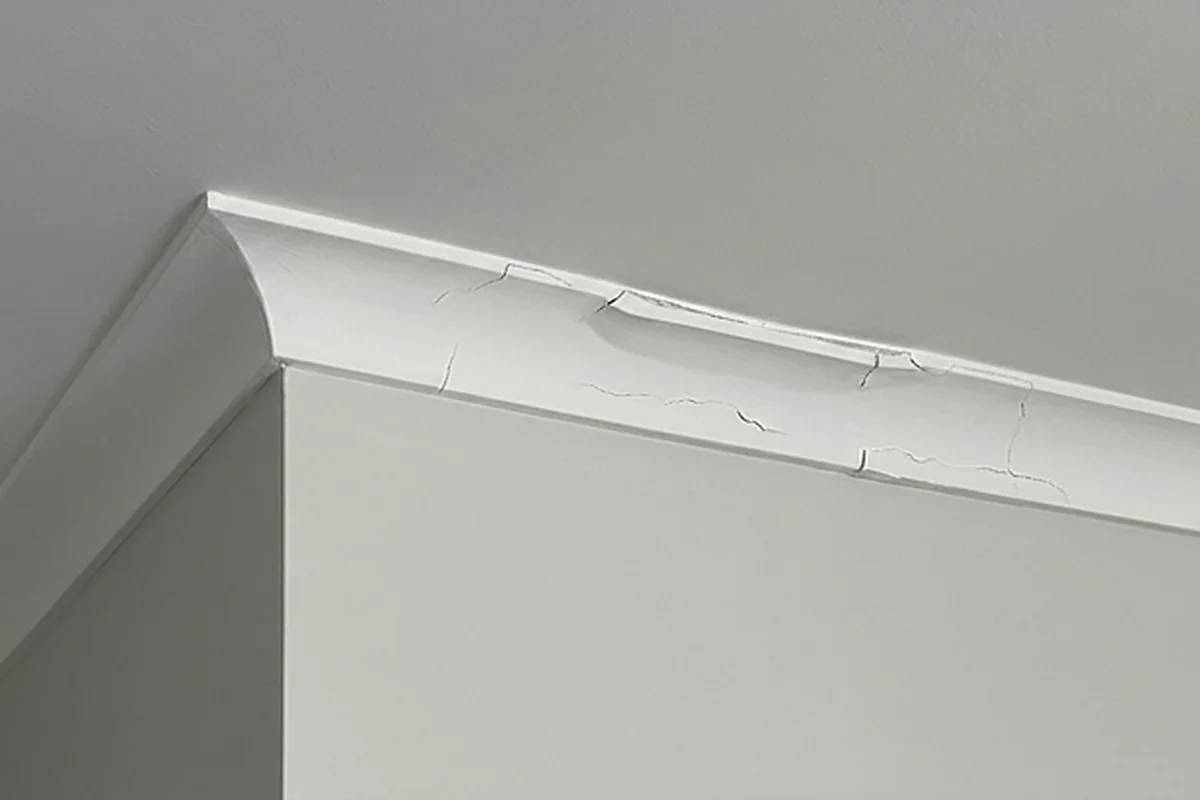
The most common cornice repair and the one worth understanding before you pay for it. In NSW, cracking of cornice joints is defective if it is there at handover. It is also defective if it goes past 1mm within the first 24 months. That covers butt joints, mitres, and the junctions with walls and ceilings. So on a newer house the first question is not what it costs to fix, it is who owes the fix. Whatever we find at the corner goes to you in writing before you decide anything. On an older house it is a repair, and the corners are cut out and re set rather than filled. Filler in a moving mitre reopens, which is why the corner comes out instead.
- Mitres cut out and re set, not filled over
- Butt joints prepared to meet accurately
- The 24 month position explained before you pay
- Cause looked for on a recurring crack
- Second coat to every mitre and butt
- Written down with photographs
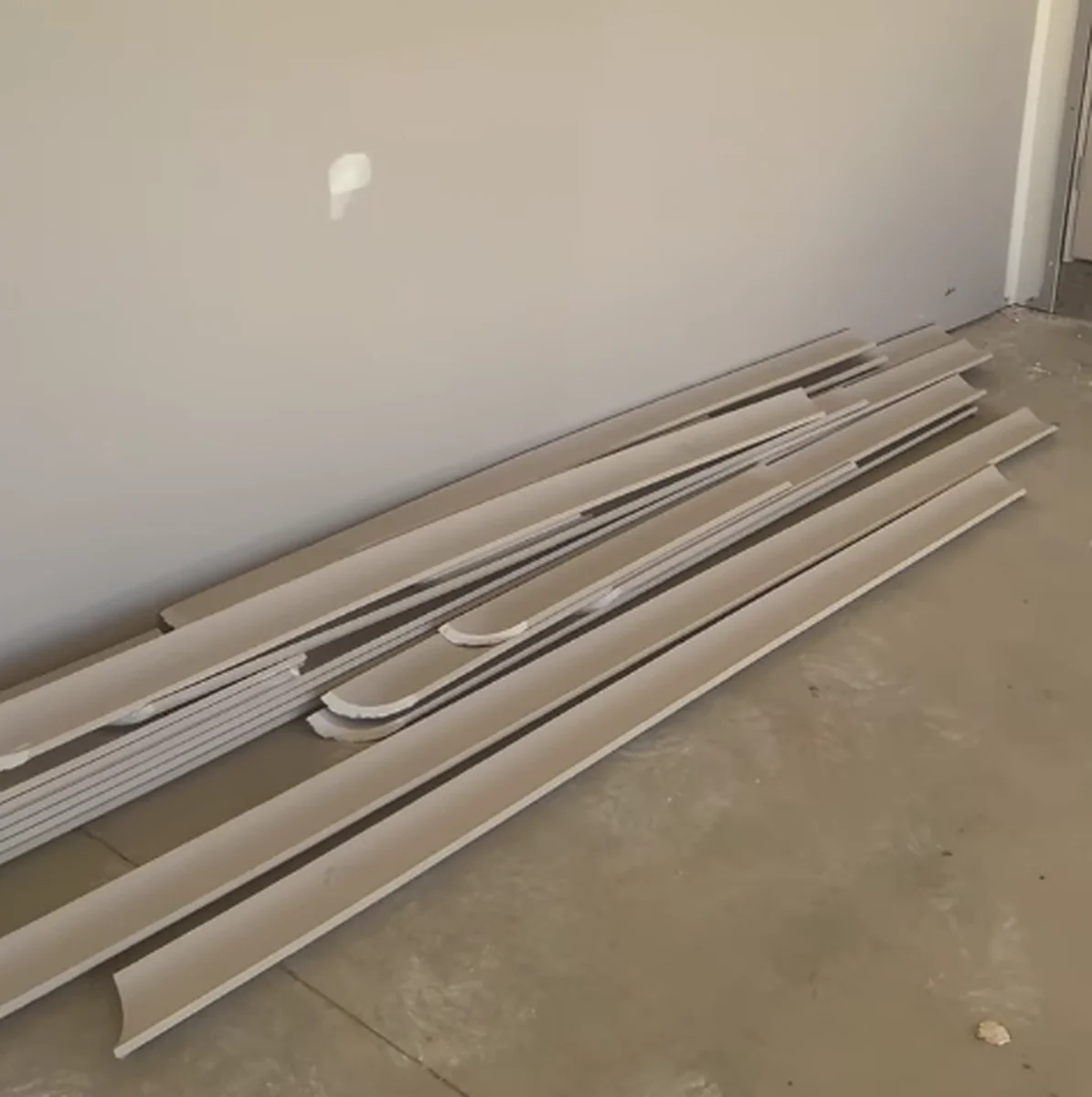
Cornice that has come away, and the reason it did
A run of cornice on the floor is a bond failure, and bond failures have causes worth naming. It was fixed over gloss or oil based paint that was never primed. It was fixed to tile, which cornice cement does not hold reliably. It went up on a hot dry day and the cement lost its water before it gained strength. Or it went onto a surface that needed a masonry adhesive rather than cornice cement, such as fibre cement or render. We work out which before re fixing, because the same surface will do the same thing again. Where a control joint runs into the cornice, that joint gets carried through it. The gap is filled with a flexible sealant that takes paint, rather than bridged and left to crack.
- The surface identified before anything is mixed
- Sanded, primed or mechanically fixed as needed
- Tile supported for 24 hours while it sets
- Masonry adhesive where cornice cement will not hold
- Control joints carried through and sealed
- Nail holes filled after the temporary fixings come out
What we do not fit, said plainly
We fit plain cove cornice and we do square set. We do not fit ceiling roses, ornate or decorative cornice, arches, curved walls, niches or wall panelling, because that is a different discipline. Matching a period profile in an older home is ornamental plastering. That profile is run, cast and moulded rather than cut from a length, and it is not what this business does. Saying so before you book us is worth more than finding out on the day. Where a cornice has dropped away and the ceiling near it looks wrong too, we look at the ceiling first. Re fixing cornice onto a ceiling that is moving is worse than leaving it alone.
- Plain cove and square set only
- No ceiling roses and no ornate profiles
- No arches, curved walls or niches
- No period profile matching or reproduction
- The ceiling checked before the cornice is quoted
- Told before the booking, not on the day
When people call us about cornice
New work, and the cornice goes on with the lining
A new house, an extension or a re lined room. The cornice is part of the same job as the sheeting. The choice between cove and square set is made at quote rather than at the end.
Cracks have opened at the corners
Usually at the mitres and along the wall to ceiling line, and usually in the first couple of years. NSW has a published position on this one, and the answer sometimes is that you have a claim rather than a bill.
A run of cornice has come away from the wall
Almost always a bond failure rather than an accident. The reason is almost always what the surface was, or what the weather was on the day it went up.
A bathroom or kitchen has been retiled up to the ceiling
Cornice cement will not hold on ceramic tile by itself. That job needs a mechanical fixing and a hold while it sets, which changes the program.
Somebody wants the cornice gone and a square set line instead
Taking cornice off damages the wall and ceiling faces underneath it every time, so this is a cornice job and a patching job. We price it as both.
The cornice has dropped and so has the ceiling near it
Here the cornice is the thing you can see rather than the thing that is wrong. We look at the ceiling before we quote anything at the junction.
What decides whether a cornice stays straight and stays up
4mm over 2m, and it is a published standard
In NSW a plaster cornice is defective if it deviates from a straight line by more than 4mm over any length up to 2m. The test applies where it is visible from a normal viewing position. It is the tightest tolerance in this trade. The cornice has to hold it along a line where a wall meets a ceiling, and both have their own allowance. Hitting it on an old wall takes set out and packing rather than luck.
Every corner is mitred, and corners are the job
All corner angles are mitred, cut in a mitre box with the cornice oriented the way it will sit on the wall. Not coped, not cut freehand. This is why a room with a bay window, a bulkhead or a stepped ceiling costs far more than a plain rectangle. The floor area can be identical. Cornice labour follows the corner count, not the lineal metres.
The set down mark equals the cornice size
The line is marked on the wall measuring down from the ceiling surface, and the measurement is the size of the cornice. 55mm down for a 55mm cove, 90mm down for a 90mm. That is what makes the cornice project equally onto the wall and the ceiling. Get it wrong at set out and every mitre in the room fights you afterwards.
Paint is what most failed cornice was stuck to
The best adhesion is to unpainted plasterboard, and almost no repair is on unpainted plasterboard. Low gloss acrylic gets sanded first. High gloss and oil based paint gets coated with a PVA adhesive. Ceramic tile does not take cornice cement reliably at all. So tile means fixing mechanically to the ceiling board, sealing the gap and supporting the cornice for 24 hours.
A hot dry day can set cornice cement without it getting strong
The water in the mix evaporates or gets drawn into a dry lining, and the cement sets while lacking strength. It looks perfect on the day and lets go months later. The published answer is process. Mix small batches and let them stand ten to fifteen minutes before use. Butter one length of cornice at a time, and damp the contact surfaces with a water brush when conditions are severe.
Get a free quote
Tell us the rooms and send a photo of a corner. Cornice is priced by corners more than by metres, because every corner is a mitre and a mitre is where the time goes. A photo also tells us what the wall is finished in, which decides how much preparation the job needs before any cement touches it.
Brands we supply, install and repair
We supply the board, the cornice and the compound on every job, and these are the brands we sheet with.
Service available across every Wollongong region
The Northern Illawarra
Helensburgh, Stanwell Park, Coalcliff, Scarborough, Austinmer, Thirroul, Bulli, Woonona, Russell Vale, Corrimal, Towradgi, Balgownie and Fairy Meadow
Wollongong and Dapto
Wollongong, North Wollongong, West Wollongong, Coniston, Mangerton, Figtree, Cordeaux Heights, Mount Keira, Unanderra, Berkeley, Port Kembla, Warrawong, Kanahooka, Horsley, Koonawarra and Dapto
Shellharbour and Kiama
Albion Park, Albion Park Rail, Oak Flats, Lake Illawarra, Mount Warrigal, Barrack Heights, Warilla, Flinders, Shell Cove, Shellharbour, Blackbutt, Minnamurra, Kiama Downs and Kiama
The Shoalhaven
Nowra, North Nowra, South Nowra, Bomaderry, Worrigee, Sanctuary Point, St Georges Basin, Vincentia and Huskisson
The Southern Highlands
Mittagong, Bowral, Burradoo, Moss Vale, Berrima and Renwick
Frequently asked questions
Does square set cost more than cornice?
No. Square set and plain cove cornice are included in the same job at the same price here. Most people expect it to be the other way round. Square set is the flush junction with no moulding, so a wall runs into a ceiling with nothing covering the line. Cornice is the moulding over that junction, and the choice is about how you want the room to read rather than about budget. It is settled at quote stage rather than partway through the job.
Why does my cornice keep cracking in the corners?
Because a mitre is the one point where two lengths, a wall and a ceiling all move against each other. Filling a cracked mitre puts compound into a joint that is still moving, so it reopens. The repair is to cut the corner out and re set it. A second coat goes to the mitre once the first will hold the cornice. If a crack keeps returning in the same place there is usually a control joint underneath it. That joint has to be carried through the cornice rather than covered over.
How straight does a cornice have to be?
Within 4mm of a straight line over any 2m length, measured in NSW and judged from a normal viewing position. It is the tightest published tolerance in this trade, and what makes it demanding is the location. The cornice sits on the junction of a wall and a ceiling. Each of those surfaces is allowed its own deviation before the cornice is fitted. A cornice that is dead straight on an older house is a set out and packing job, not a cutting job.
Can you fit cornice onto walls that are already painted?
Yes, with preparation, and the preparation is what decides whether it stays up. The best adhesion is to unpainted plasterboard, and low gloss acrylic paint gets sanded back first. High gloss acrylic and oil based paint gets coated with a PVA adhesive before any cement goes on. Skipping that step is the most common reason a cornice we get called to has come away from the wall. It is also invisible once painted, so nobody finds out until it drops.
Can cornice go up over bathroom tiles?
Yes, but not on cornice cement alone. Cornice cement does not bond reliably to ceramic tile, so tile changes the method. Where the tiles run to the ceiling, the cornice is bonded to plasterboard above them if there is any. Otherwise it is fixed mechanically into the ceiling board, and the gap to the tile is sealed with a wet area sealant. Either way it is supported for 24 hours while the adhesive dries. That support period is real and it cannot be rushed, so a tiled room is a longer job than the same room untiled.
Do you install ceiling roses or ornate cornice?
No. We fit plain cove cornice and we do square set, and that is the extent of it. Ceiling roses, ornate and decorative cornice, arches, curved walls, niches and wall panelling are all outside what this business does. Matching a period profile in an older home is ornamental plastering, a different trade skill. There the profile is run, cast or moulded rather than cut from a length. We would rather say that now than have you find out on the morning of the job.
What size cornice should I use?
In NSW the two cove sizes available everywhere are 55mm and 90mm. The 75mm size is a Western Australian and Victorian one, so it is not what we fit here. As a rule the smaller profile makes a room read taller, which is worth having in a standard 2400mm ceiling. The larger one gives a heavier and more formal line that suits a higher ceiling or a bigger room. It is a look rather than a performance decision, and either is fitted the same way.
Do you have to take the old cornice off?
Yes, if you are changing the profile or going to square set. Cornice is bonded along both back edges, so removing it damages the surfaces behind it. The paper face of the wall and the ceiling comes off with it along the whole run. That means the junction has to be made good before anything new goes on. So a cornice replacement is always a cornice job and a patching job, and it gets priced as both. Pricing it as cornice alone is the usual way this job goes wrong.
Ready to get started?
Get a free quote, or call and tell us what the job is.