Asbestos in older homes, and what happens next
We ask how old your house is before we quote, and this page explains why we ask. It is the one page on this site that sells nothing at all. We do not remove asbestos and we do not work with fibro at all. We will not cut into a lining in an older home until somebody has established what it is. The surprising part is that the legal duty here sits with us rather than with you. That is the opposite of what most pages on this subject tell you.
What we do when we suspect it
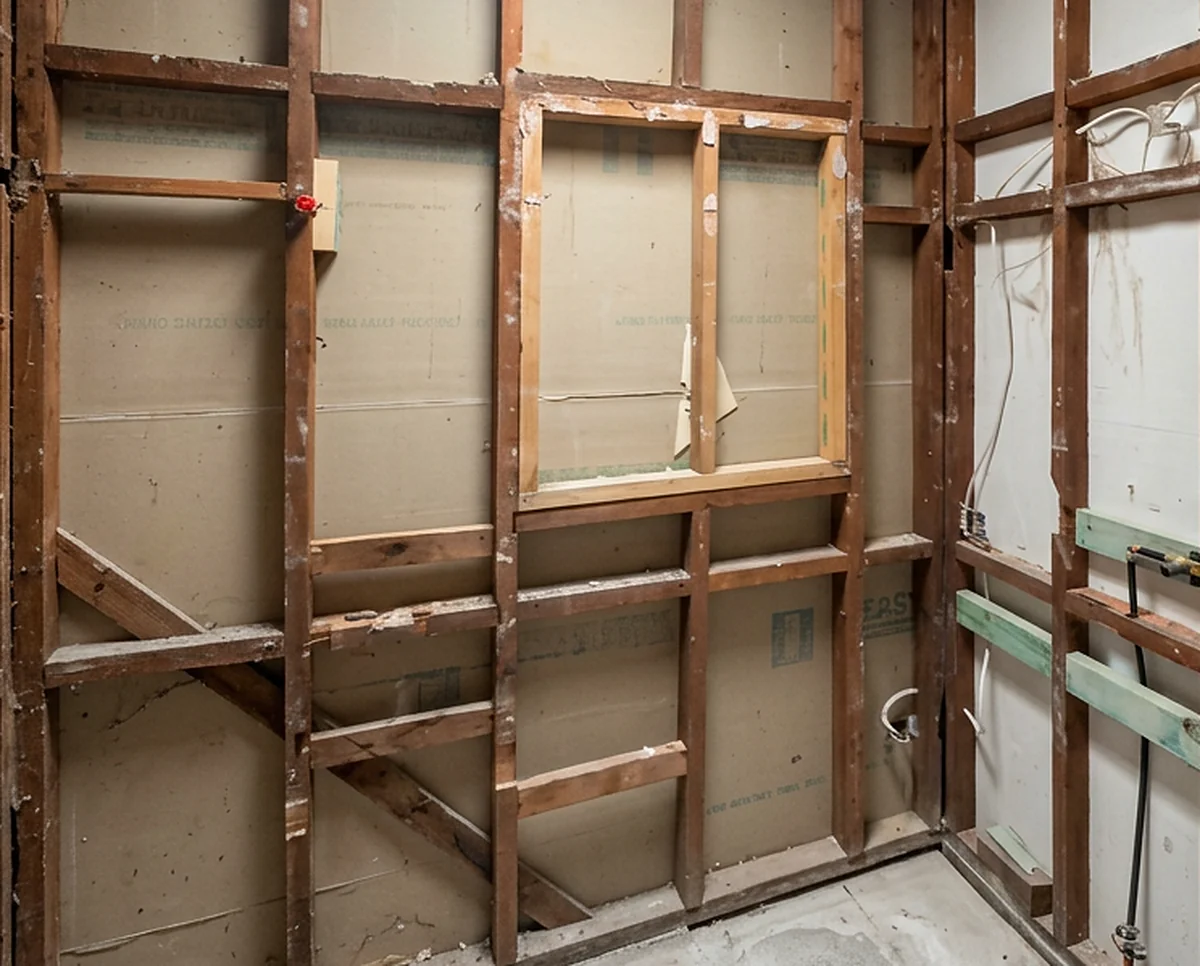
We stop, and then we tell you in writing what we have found and where it is. That advice is an obligation rather than a courtesy, because the Code requires a business to tell the owner when asbestos is identified. We do not cut, drill, sand, scrape or break anything we suspect, and we do not dry sweep debris around it. We photograph what we can see, we leave the area alone, and we set out what has to happen before any plastering can start. Then we recommend a licensed contractor to do the part we are not licensed for.
- We stop and we say so
- Nothing suspect is cut, drilled or sanded
- The finding given to you in writing
- Photographed where it can be seen safely
- Referred to a licensed contractor
- No plastering until the site is clear
It cannot be identified by looking at it
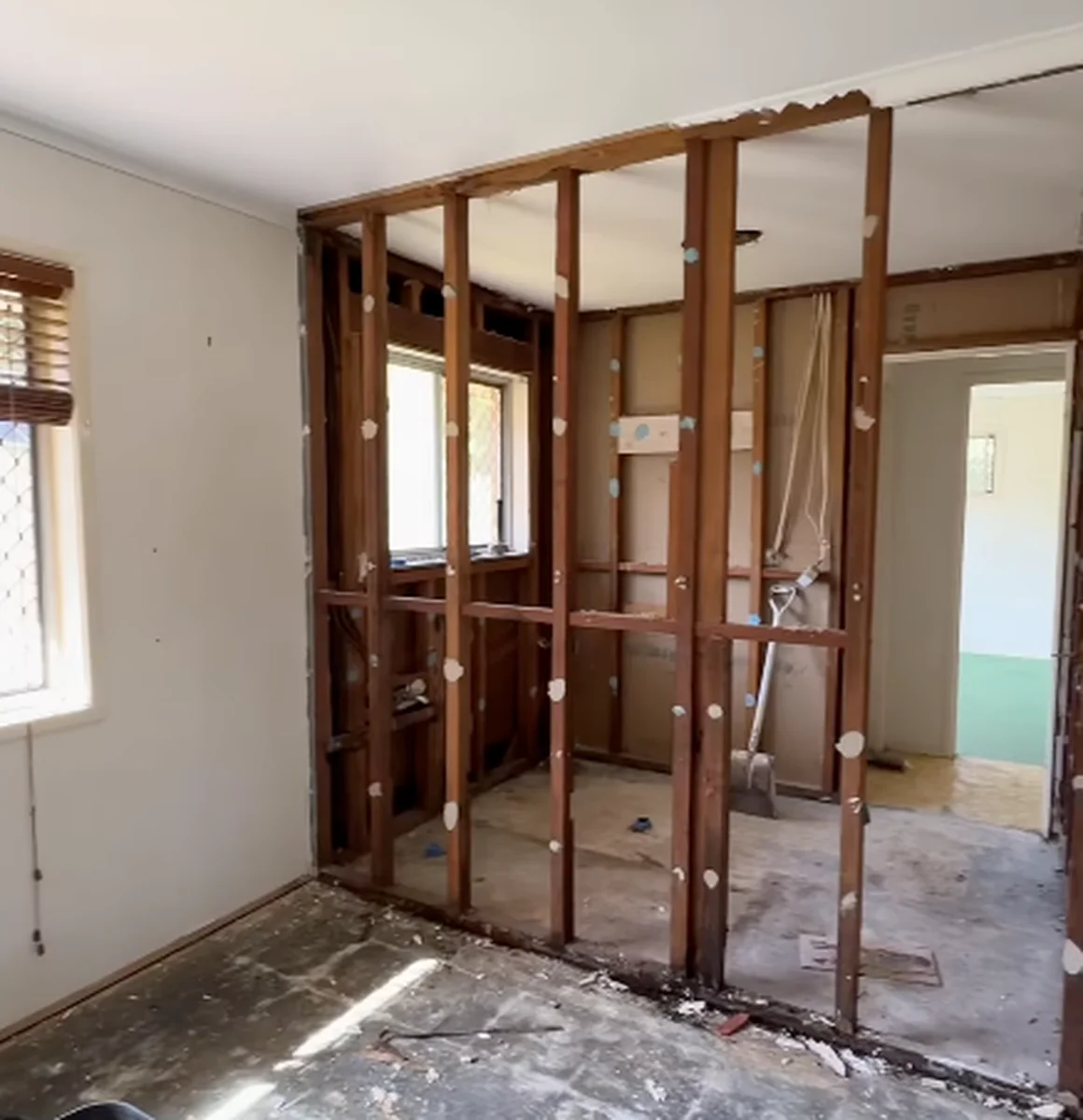
Nobody can tell you a lining contains asbestos by looking at it, and nobody can tell you it does not. That includes us, and it includes anyone who says otherwise on a first visit. Age and material type tell you a lining is worth testing, and they never settle the question on their own. Only a laboratory result does that, arranged through somebody competent to take the sample. So when we say a lining is suspect, we mean exactly that and nothing more. Treating a suspect lining as though it were confirmed is the safe way round. It costs you a survey rather than a house full of fibres.
- Age and material narrow it down
- Neither one answers the question
- A sample and a laboratory settle it
- Suspect is treated as if confirmed
- We do not guess either way
- Nobody can tell by sight, including us
The sequence, and why it cannot be rushed
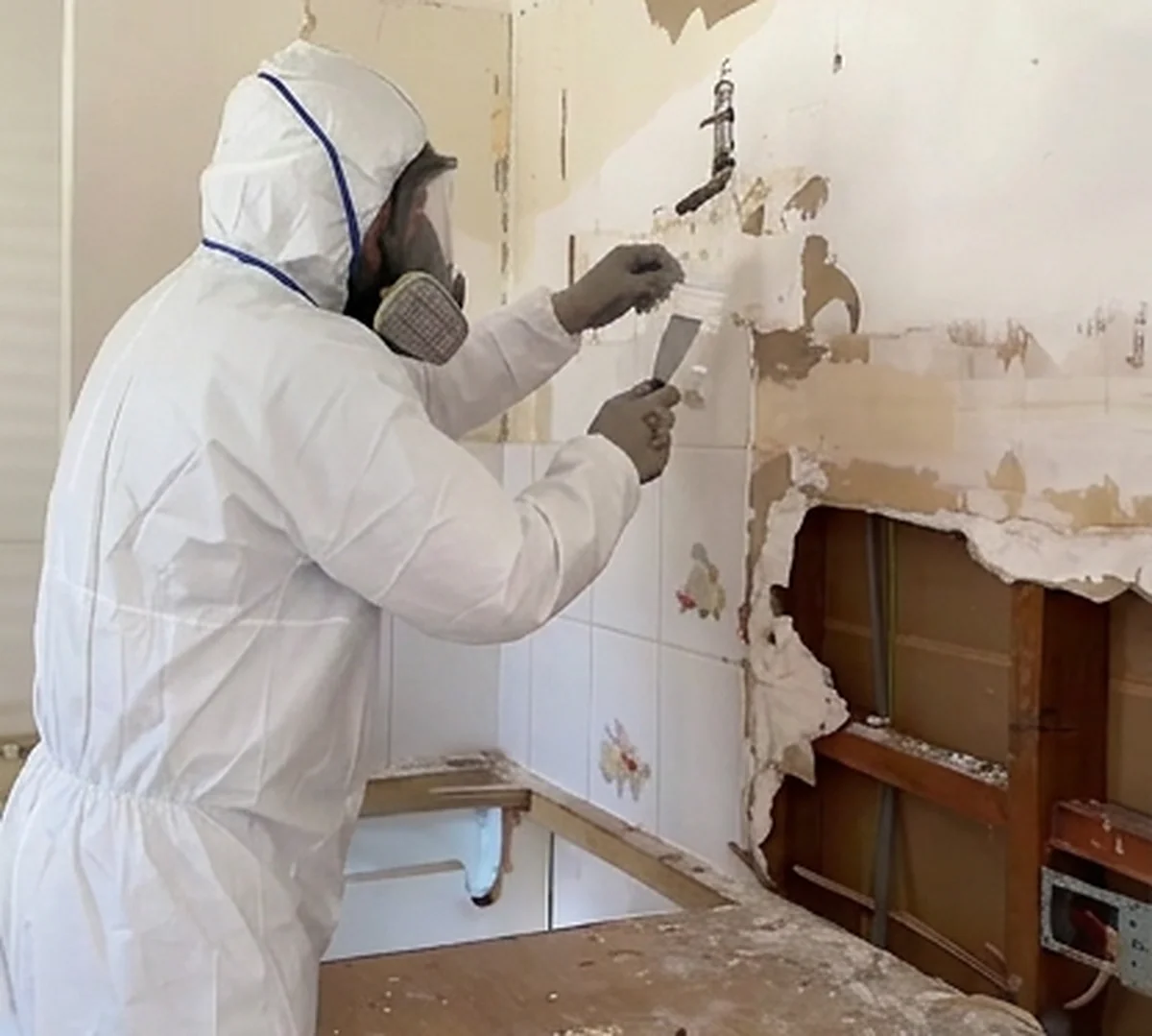
A finding turns a plastering job into a sequence with other people in it. A survey by a competent person comes first, and you decide whether to have one. If asbestos is confirmed then a licensed removalist is engaged to take it out. That is Class A where any of it is friable, and Class B above 10m² of non friable. The regulator has to be given at least five days of written notice before licensed removal starts. Where Class A work was involved, an independent assessor inspects and issues a clearance certificate afterwards. Only then can anybody go back in, and only then do we start.
- Survey first, and it is your decision
- Class A for any friable material
- Class B above 10m² of non friable
- Five days of written notice to the regulator
- Independent clearance inspection and certificate
- Days to weeks, and outside our control
What we are here for
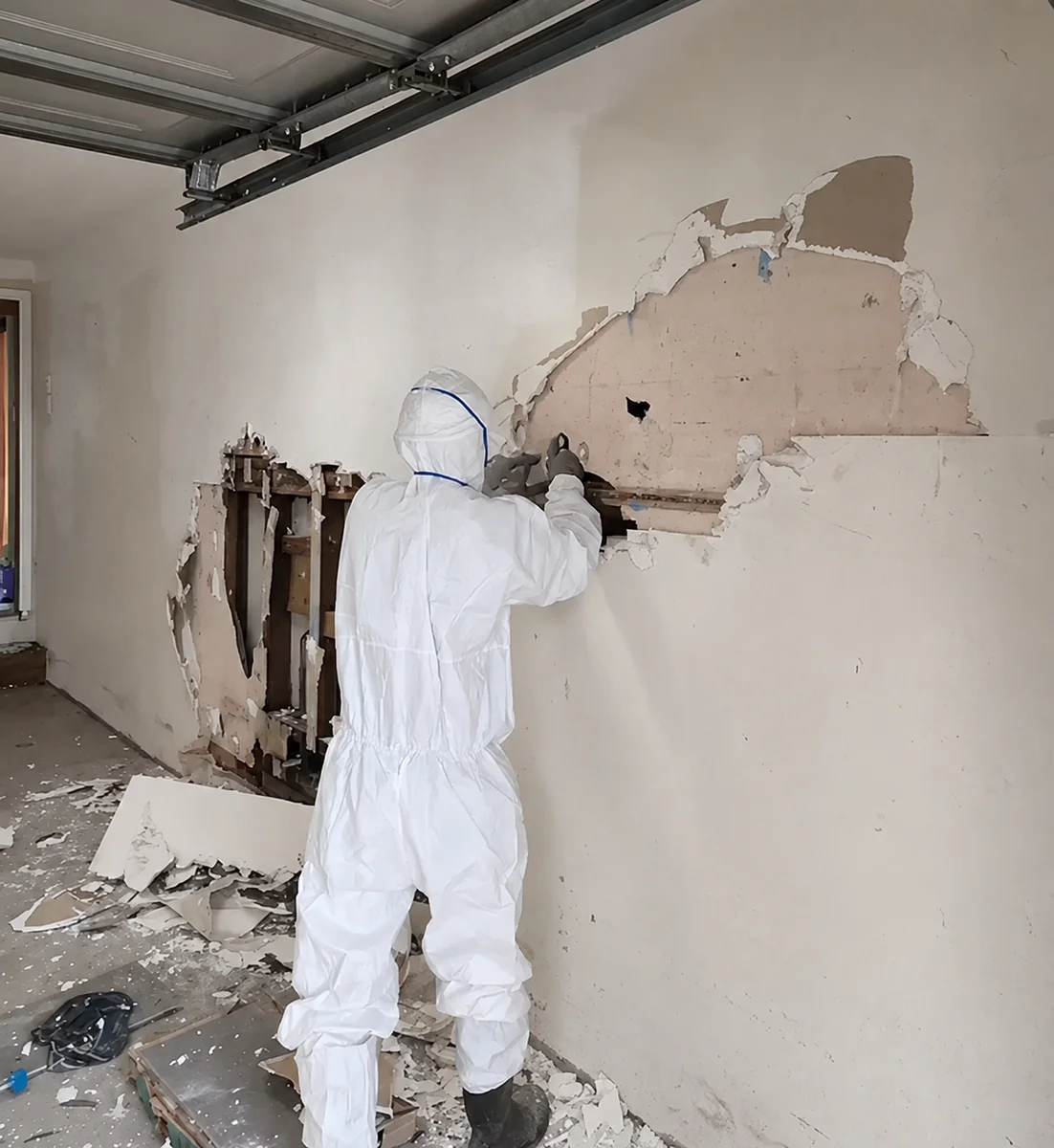
We are the trade that lines the room after somebody else has made it safe. New plasterboard on the walls and the ceiling, moisture resistant board in the wet areas, and everything set and sanded ready for the painter. That is the work we hold a licence for and it is the work we want. What we will not do is open up an older home and hope. The person carrying that risk is us, and the people living with the result are you. A business that says stop is worth more to you than one that says yes on the phone.
- New linings once the site is cleared
- Wet area board where it belongs
- Ready for the painter's primer coat
- The work we are licensed for
- Older homes handled rather than avoided
- Told before the job, not during it
When this comes up
A bathroom or laundry in a 1960s or 1970s house
Wet area sheeting and the backing behind wall tiles are among the likeliest places in an older home. It is the most common way this conversation starts.
A ceiling that has sagged in a pre 1980 home
The ceiling has to be opened up before anybody can say why it dropped. That cannot happen until the question is answered.
Eaves, soffits or a patio ceiling on an older house
Eaves lining is another place this trade meets it. Outdoor lining work on a pre 1990 house gets the same question as anything indoors.
A re line or an extension where old work meets new
Wherever an existing lining has to come off, be cut or be drilled, the age of that lining decides what happens first.
Somebody has started pulling a room apart themselves
This is the one where the right answer is to stop rather than to keep going and ask afterwards. Stop, close the room off, and get it looked at.
A pre 1990 house somebody has recently bought
Somebody is planning work and wants to understand what they have before they commit to it. That is a good time to ask rather than a late one.
What the law says
The duty is ours, not yours
When a business is engaged to refurbish a home, that home becomes the workplace of the business. It has to identify asbestos likely to be disturbed and see it removed before work starts. The regulator's Code of Practice then says something almost nobody publishes: the Regulation places no duties on the homeowner. So this is our obligation to manage, and telling you is part of it.
Your house has no asbestos register, so a survey does that job
Workplaces keep an asbestos register. Homes are not required to have one. So the Code recommends a pre refurbishment survey by a competent person where asbestos is likely to be disturbed. That is the reason a plasterer asks for something you did not expect to pay for. It comes from the regulator's own code rather than from the tradesperson.
Two dates matter, and they do different jobs
The regulator says caution is needed with buildings constructed before 1990, and asbestos cement sheeting was used from the 1940s to the late 1980s. Separately, 31 December 2003 is when the national ban on all forms of asbestos took effect. It is also the date the demolition and refurbishment provisions reach back to. One is the practical threshold and one is the legal one.
Ten square metres, about the size of a small bathroom
That comparison is the regulator's own. A business without a licence may only remove up to 10m² of non friable material. Beyond that it needs a Class B licence. Any friable asbestos at all, in any quantity, needs a Class A licence, and nobody without one may touch it. Three thresholds, and the first one is smaller than most people picture.
No clearance certificate means nobody goes back in
Where the work needed a Class A licence, an independent licensed assessor has to inspect the area and issue a clearance certificate. It has to show respirable fibre levels below 0.01 fibres per millilitre. Until that certificate exists, the area cannot be re occupied for normal use or for other work. That includes us, and it is why a finding moves the date.
Frequently asked questions
Do you remove asbestos?
No. We are plasterers, we hold no asbestos removal licence, and removal is a different trade with its own licensing. What we do is stop when we suspect it and tell you in writing what we have found. Then we recommend a licensed contractor who can complete the removal. Once the site is clear and any required clearance certificate has been issued, we come back and do the lining. Being straight about that boundary is more useful to you than a business that takes the job and works it out later.
Whose responsibility is asbestos, mine or the tradesperson's?
Under work health and safety law it is the tradesperson's, which surprises most people. When a business is engaged to refurbish a home, that home becomes the workplace of that business. It then has to identify asbestos likely to be disturbed and see it removed before work commences. The regulator's Code of Practice states that the Regulation places no duties on the homeowner. Other laws such as waste and disposal rules still apply to you, and the work health and safety duty is ours to carry.
How old does a house have to be for this to matter?
The regulator advises caution with any building constructed before 1990. Asbestos cement sheeting was in common use from the 1940s to the late 1980s. There is a second date that matters legally, which is 31 December 2003, when the national ban on all forms of asbestos took effect. The demolition and refurbishment provisions reach back to structures built before that date. So a pre 1990 house changes the conversation, and anything pre 2004 engages those provisions.
Can you tell by looking whether my ceiling has asbestos in it?
No, and neither can anybody else. Asbestos cannot be identified by sight in a lining, no matter how experienced the person looking at it is. What age and material type do is tell you a lining is worth testing rather than settling the question. The answer comes from a sample and a laboratory, arranged through somebody competent to take it. Anyone who tells you on a first visit that a lining is definitely clear is guessing. It is not a safe thing for anybody to guess about.
Why do I need a survey when my house has never had one?
Because a home is not required to have an asbestos register, which a workplace is. The Code of Practice recommends a pre refurbishment survey by a competent person where asbestos is likely to be disturbed. That recommendation comes from the regulator rather than from the tradesperson standing in your hallway. It exists because there is no register to look at in a house, so the survey stands in for one.
How much asbestos can be removed without a licence?
A business without a licence may remove up to 10m² of non friable material, and the regulator compares that to a small bathroom. Beyond that quantity, the work needs a Class B licence. Any friable asbestos at all requires a Class A licence, whatever the amount, and it must not be touched by anyone without one. We do not do this work in any quantity, and we do not recommend anybody take it on themselves.
How long will asbestos removal hold up my plastering?
Days to weeks, and the honest answer is that it is outside our control. A survey and its results come first, then a removalist has to be available. The regulator has to be given at least five days of written notice before licensed removal begins. Where the work required a Class A licence, an independent assessor then inspects and issues a clearance certificate before anyone can go back in. We would rather tell you that at the quote than after you have booked a date.
What if I have already started work and hit something suspect?
Stop, and do not clean it up in any way at all. Do not sweep it, do not vacuum it, and do not put a fan on. Close the room off, keep people and pets out of it, and leave whatever has been disturbed where it is. Then get somebody competent to look at it before anything else happens, including any further work of your own. The instinct is to tidy up, and tidying up is the worst of it. That is what puts fibres into the air of a house people live in.