Renovation and extension plastering in existing homes
We re line, extend and re ceiling existing homes throughout the Illawarra and the Shoalhaven. A new house is a known surface, and an old one is a diagnosis first. The frame, the linings and the eras all differ, and none of them were built to what your new work will be measured against. We check what is there in writing before we quote, which is what the NSW guide to standards and tolerances recommends. We tell you what about the existing house will pull the new work down. You can stay living in the house while we work.
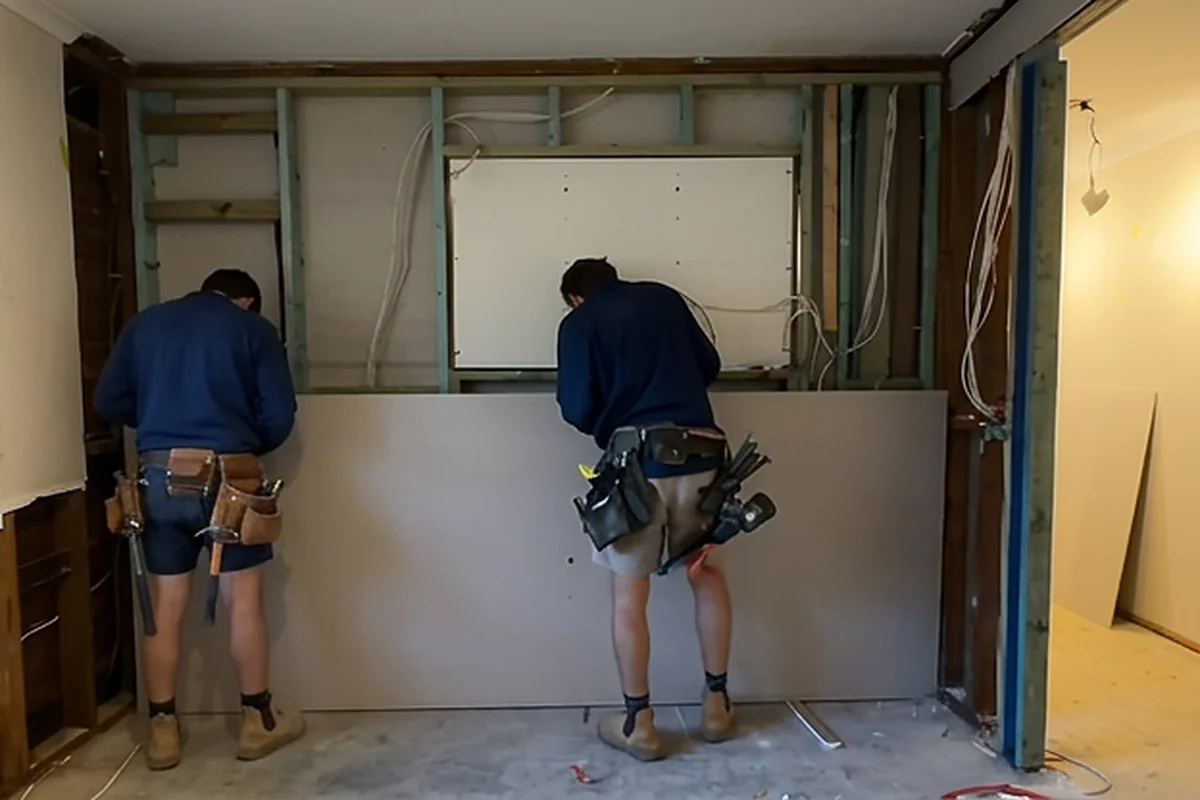
Extensions, alterations and tying new work into the old house
We line new rooms and tie them into what is already there, and the set out happens before anything goes up. We mark where the framing type changes and where the lining changes. The same goes for where an old ceiling meets a new one, and where a rise of studs ends. Every one of those is a place the two halves of your house will move against each other. Every one of them gets a decision rather than a fill. Long sheets go in wherever the room allows it, and that is deliberate. Every butt joint in an old room is a crack waiting for its first summer.
- Written pre start check before the quote
- Junctions set out before lining
- Control joints, beads or shadowlines by design
- New board matched to the existing thickness
- Full length sheets wherever the room allows
- Cornice matched, replaced or changed
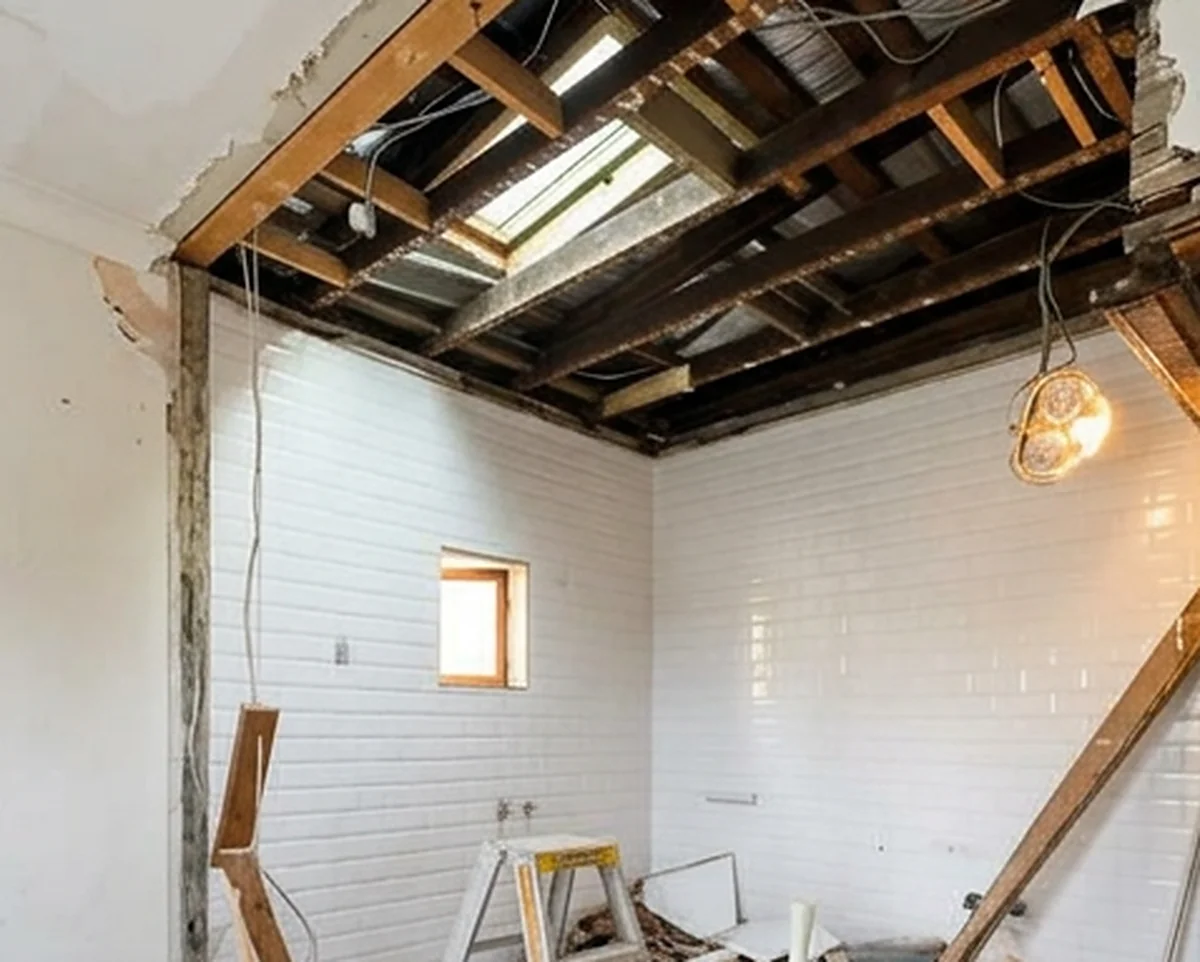
Ceiling replacement in older homes
Ceilings in Illawarra houses built between the 1920s and the late 1970s are usually fibrous plaster rather than plasterboard. It is a brittle sheet reinforced with hessian or fibreglass mat and held up on plaster wads. It behaves nothing like a modern ceiling and it comes down differently. We work out what is up there before quoting, and where a ceiling is being replaced rather than repaired we sheet it new. Ceiling board is chosen against the joist spacing that is actually there rather than the one a new house would have.
- Fibrous plaster identified before quoting
- Ceilings sheeted new where replacement is right
- Board chosen against the joists you have
- Set down marked to a laser line
- Cornice reinstated or changed
- Waste into the site skip
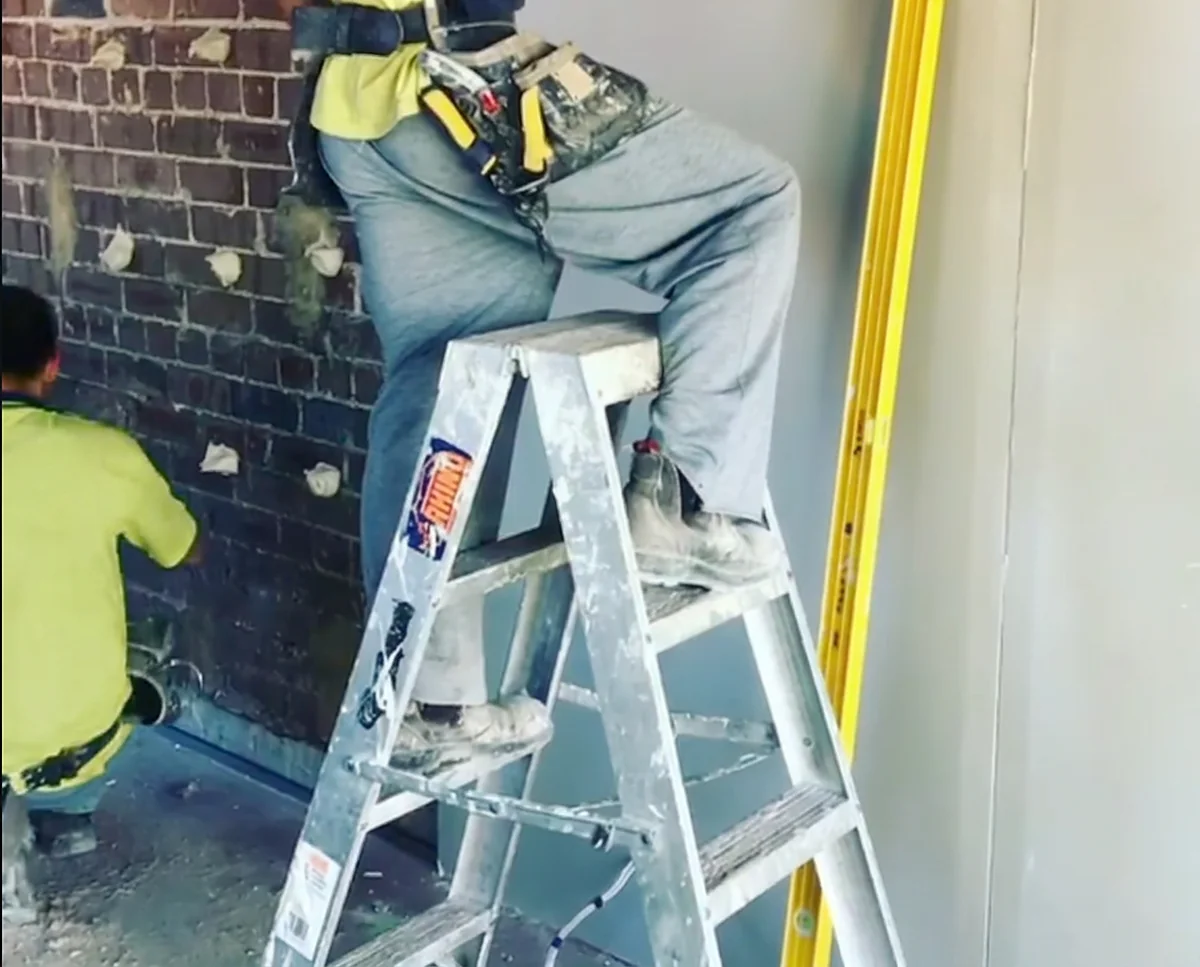
Dry lining old brick and block walls
Plasterboard fixed straight onto masonry is the alternative to render and set plaster. It gives you a flat modern wall in a house that never had one. It is not a damp fix, and the manufacturer says so in those words. It also cannot be used where the wall is going to be tiled or where the wall is over 3m high. The adhesive is a setting plaster, and the sheets are held for the first 80 minutes. The wall is then left undisturbed for 48 hours before anything is jointed. That waiting is not padding, and it is the whole reason the finish holds.
- An alternative to render and set plaster
- Levelling pads where the wall is out by more than 15mm
- Sheets held for the first 80 minutes
- Undisturbed for 48 hours before jointing
- Not used on walls to be tiled
- Damp identified before you spend anything
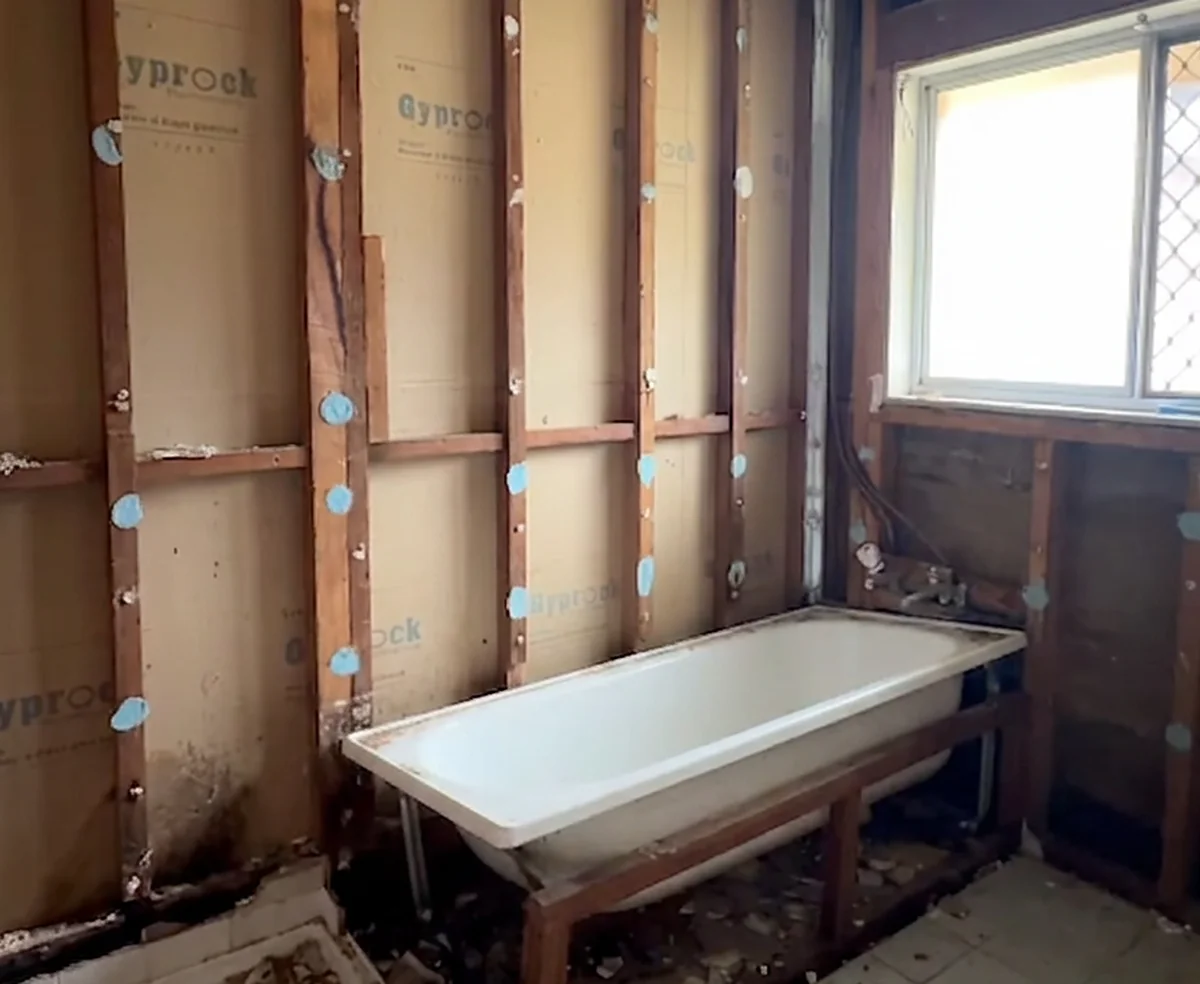
Bathrooms, laundries and wet area renovation
A wet area is a different specification from the rest of the house. It arrives inside a job most people think of as tiling. The board is moisture resistant and it is fixed with screws only rather than adhesive. The fasteners are a higher corrosion class, and the jointing behind tiles stops at the second coat with no finish coat over it. We identify which walls are wet area walls at quote stage rather than at sheeting stage. The difference changes the material order rather than only the method.
- Moisture resistant board to wet areas
- Screw fixed only, no adhesive
- Higher corrosion class fasteners
- Wet area jointing behind tiles
- Identified at quote stage
- Walls left ready for the tiler or the painter
What brings people to us on a renovation
The extension is framed and it has to meet the old house
The junction between new lining and hundred year old walls is the whole job. We set out where every joint goes before a sheet is lifted, rather than discovering it at the finish coat.
We are opening up the kitchen and the ceiling is coming out
A ceiling from the 1920s to the 1970s is usually fibrous plaster held up on plaster wads, and it comes down differently to plasterboard. We work out which one you have before quoting.
The last renovation cracked and we want to know why
Cracks at a junction, peaking joints, popped nails and a cornice that has come away all have named causes. We look at the failure before pricing the fix, so the same thing does not happen twice.
The walls in this old house are nowhere near straight
Old hardwood moves. Where the frame is outside what a flat finish needs, we set a furring channel over it to a laser plane. That is better than trying to bury the problem in compound.
We want to dry line the old brick wall instead of rendering it
Plasterboard direct onto masonry is a good finish and it is not a damp fix. If there is damp in that wall it will still be there afterwards, and we will say so before you spend anything.
We are doing the bathroom and the laundry
Wet areas are a different specification, screw fixed only with different fasteners and a different jointing system. They arrive inside a job most people think of as tiling and joinery.
How we work on an existing house
A written check of the existing house before you get a price
We record the age of the house, the lining type and its thickness, and the framing species and condition. Moisture, the cornice profile and any existing cracking go down as well. Then we photograph all of it. The NSW guide to standards and tolerances recommends exactly this. It says the owner should be told beforehand about anything in the existing building that will drag the new work down.
Where new meets old you get a joint or a moulding, by design
New board against old fibrous plaster, old lath and plaster, masonry or a different thickness is a junction of dissimilar materials. The NSW guide treats cracking there as a defect. Its own note says to consider a movement joint or a moulding at those junctions. So we detail them: a control joint, a stopping bead, a shadowline or a cornice.
An old frame gets levelled, not buried in compound
A flat finish needs the frame within 4mm over an 1800mm straight edge, and old hardwood rarely is. The compliant answer is a levelling system rather than more compound, so we set furring channel on clips to a laser plane. It also gives a straight, consistent screw line over timber that will not take a fixing reliably.
Old hardwood takes different screws to new pine
The manufacturer publishes a separate fastener table for hardwood, and it specifies shorter screws than softwood for the same board. Dense old timber is harder to get into and easier to overdrive. It also notes that a pilot hole may be needed. This is why an unmodified screw gun struggles on a pre war frame.
You keep living in the house while we work
Floors and belongings get covered, and the work zone is kept clear. Sanding is mostly done with a machine that takes the dust into a bag. Some hand sanding is unavoidable, so there will be dust in the air while we are there. On a renovation the offcuts and the waste go in the site skip.
Get a free quote
Send us the plans if there are plans, and photographs of the rooms if there are not. Either will get you a price, and on a renovation we would rather come and look as well. What is behind the wall decides more of the job than what is in front of it, and looking costs nothing.
Brands we supply, install and repair
We supply the board, the cornice and the compound on every job, and these are the brands we sheet with.
Service available across every Wollongong region
The Northern Illawarra
Helensburgh, Stanwell Park, Coalcliff, Scarborough, Austinmer, Thirroul, Bulli, Woonona, Russell Vale, Corrimal, Towradgi, Balgownie and Fairy Meadow
Wollongong and Dapto
Wollongong, North Wollongong, West Wollongong, Coniston, Mangerton, Figtree, Cordeaux Heights, Mount Keira, Unanderra, Berkeley, Port Kembla, Warrawong, Kanahooka, Horsley, Koonawarra and Dapto
Shellharbour and Kiama
Albion Park, Albion Park Rail, Oak Flats, Lake Illawarra, Mount Warrigal, Barrack Heights, Warilla, Flinders, Shell Cove, Shellharbour, Blackbutt, Minnamurra, Kiama Downs and Kiama
The Shoalhaven
Nowra, North Nowra, South Nowra, Bomaderry, Worrigee, Sanctuary Point, St Georges Basin, Vincentia and Huskisson
The Southern Highlands
Mittagong, Bowral, Burradoo, Moss Vale, Berrima and Renwick
Frequently asked questions
Can we live in the house while you are working?
Yes. Renovation and repair work is done in occupied houses all the time and you do not need to move out. What we ask is that the work zone is clear of furniture and belongings before we arrive. You can cover flooring and anything left nearby if you want a second layer of protection. Nobody needs to be home while coats are going off. Sanding is mostly done with a machine that bags the dust. Some hand sanding is unavoidable, so expect dust in the air on those days.
Do you paint the walls when you have finished?
No. Plasterers do not paint, and we do not apply a sealer or a primer either. The walls are left sanded and ready for the painter's primer coat, which is where a plasterer's work properly ends. It is worth knowing before you book any of the other trades. A painter arriving expecting an undercoated wall has a different job to one arriving at a sanded surface. We also do not do solid plastering or cement rendering.
Will the new work crack where it joins the old house?
No, not where the junction has been detailed rather than filled. Two parts of a house built eighty years apart move at different rates, and the line between them is where that shows up. The NSW guide to standards and tolerances counts cracking at that line as a defect. It points to a movement joint or a moulding as the answer. We mark those lines before the first sheet is lifted. Then we build a control joint, a stopping bead, a shadowline or a cornice into each one. Filling the gap and hoping is what produces the crack.
Do you have to strip all the old plaster off first?
No, not always. Where the existing lining is firm, sound and straight enough for the finish you want, new board can be fixed straight over it. The fasteners go up a size to allow for the thickness underneath. That is faster, cleaner and cheaper than a strip out. Where the old lining is loose, delaminating or too far out of plane, it comes off. Lining over a failing surface only buys time, and we tell you which one you have before you commit to either.
Can plasterboard fix a damp brick wall?
No. Lining masonry with plasterboard is an alternative to render and set plaster, not a way of isolating damp, and the manufacturer states that plainly. If a wall is damp, the damp is still there behind the new lining and it will find its way through. Damp is somebody else's trade to diagnose and fix, and it needs sorting before we line anything. We would rather tell you that at quote stage than take the job and hand the problem back to you in a year.
What happens if you find asbestos in my house?
We stop, and we do not remove asbestos or work with fibro. Nothing gets opened up further once a lining is suspect. We can recommend a licensed asbestos subcontractor to handle the removal, and the plastering starts after that is finished and cleared. Houses built or renovated before 1990 are the ones where this comes up, and that is a large part of the Illawarra's renovation stock. It is worth planning for rather than being surprised by.
Is a Level 4 finish good enough for a renovation?
Yes, for almost every renovation. Level 4 is the standard a plasterboard finish in NSW is measured against unless something else is documented. It is judged from 1.5m away under ordinary diffused light rather than up close. The catch is the paint, and flat and low sheen paints are part of that standard. The guide itself warns that gloss, semi gloss and deep colours show more. A room with a lot of glass throws light along a wall rather than at it, which does the same thing. If that is your room, you want Level 5 and it needs saying before the frame is signed off.
How much does renovation plastering cost?
Renovation plastering starts from $37 per square metre, supplied and installed, and that is the same rate as a new home build. What moves the price on a renovation is what is behind the wall rather than the area of it. Framing that needs levelling adds work, and so does a lining that has to come off rather than be covered. A wet area or a junction that needs detailing does the same. We put those in the quote in writing rather than finding them later.
Ready to get started?
Get a free quote, or call and tell us what the job is.